


In a post that seems strangely apropos for the Yuletide season, DHP’s master of ‘Historian Highlights’, Jake Bransgrove interviews his successor, Chris Campbell!
A hearty welcome to Chris and the incoming team for DHP 2025!
Chris Campbell, Interviewed by Jake Bransgrove, (@Jake_Bransgrove)
* * * * *
Chris, can you tell me what you’re currently researching?
I look at an organization called the British Council, which was founded in 1934. This was – and still is – the UK’s official cultural diplomacy agency. They essentially explain and export British culture to the world, and try and present Britain as a culturally interesting and important nation. It’s a kind of soft power initiative.

A lot of the historiography on the British Council to date has been very policy focused, looking at institutional policies and thinking about it as a top-down organisation. My aim instead is to think a bit more about the actual people on the ground, people who are out there in the hundred-something countries that the British Council operates in – all across the twentieth century – and think about the role that they played in shaping and presenting a cultural image of Britain to the world.
How did you come to this subject?

Well it goes back to my undergrad. I did a module on the cultural Cold War and explored a very similar set up there, but looking at America and Russia. During the period, they had two cultural diplomacy organizations with very strong ideological motivations behind the image that they were trying to present of their own countries. I found that very interesting. I found the intersection between foreign policy and culture fascinating, and the way in which artists, musicians, and writers were mobilised in pursuit of broader national interest. It got me thinking about whether there was a British equivalent and I came upon the British Council.
I did a Master’s, and my dissertation looked at the role that the British Council played in Britain’s own contribution to the cultural Cold War. But that was a very institutional focus I took, and it became quite apparent as I was going through the archive that actually people, individual people, had an enormous role to play in the work that the British Council did. It wasn’t all orchestrated from the top. It was very much, in a kind of imperial framing, what you’d called the ‘man on the spot’, determined by who governments placed where. So I’m interested in why the British Council hired certain people, and why they decided to place them in those sorts of places.
How far do you think of yourself as a political historian?
Not too much. I would tend to self-identify more as a cultural historian. Even though I’m looking at an ostensibly political organisation, I’m not interested in the politics, I’m more interested in its culture. Starting with a fairly well-established sociological premise that people’s backgrounds influence the kind of the cultural capital that they have, what happens when – as the British Council did – you group together people who are predominantly men, predominantly Oxbridge-educated? They all have their own particular cultural capital. What does that then look like when they decide what aspects of Britain and British culture they want to present to the world? And then what does that do to the culture of the organisation? How does that replicate itself? And then my research, looking over the course of the twentieth century, considers how that was challenged. So, as more women as more people of a more middle class, professional background enter the ranks, what did that do to the organisational culture? What did that do to the culture of Britain that was projected overseas?
You’re some way into your PhD at this point, so could you give an example of one of these challenges in practice?
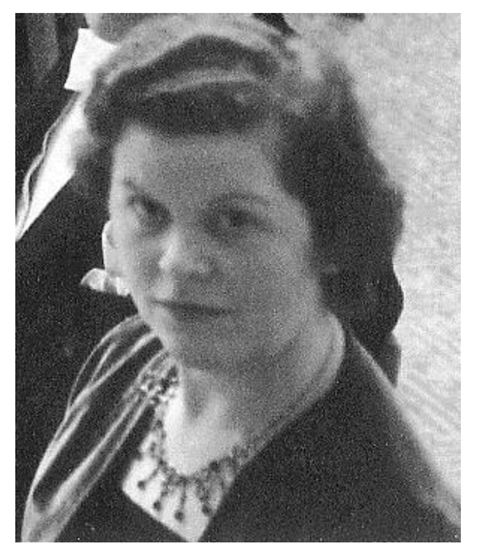
In 1954, the British Council hired the first woman into the rank of Representative – which is the equivalent of Ambassador in the diplomatic corps – to serve as Representative to France. And the whole nature of the operation of the British Council in France changed in an instant, because she brought an entirely different conception of British culture to her role and an entirely different ways of making connections. Whereas before it was very much done by men in gentleman’s clubs and that kind of thing, she instead brought an entirely different way of networking with French and British cultural figures. She used to host lunches in her own home rather than going out onto the club circuit, and she was invited into French salons, which were predominantly female spaces. The change of having a woman at the top instead of a man fundamentally altered how Britain and France collaborated – at a cultural level, at least.
Are there any unique challenges involved in the sources that you’re working with?
Well, I don’t know how unique this is to the British Council, but their archive is organised by country rather than by department, which is an interesting challenge because it means that it naturally takes you down geographically-specific routes rather than thinking about the organization as a whole. If you order up a Foreign Office document sometimes it’ll say ‘policy on XYZ’, and it literally is two pieces of paper that’s the ‘policy on XYZ’. But you can order the same thing for the British Council – ‘policy on Denmark’, or whatever – and it’s a massive stack of correspondence back and forth, and memoranda, and the actual policy document you’re looking for might not even be in there!
Oral history, as well, is a very interesting source base. It really has exemplified to me how you can tap into networks of people. You interview one person and they say ‘well, I’ll put you in touch with that person, and put you in touch with that person’. That only underscores for me the importance of studying personal relationships and networks within an organization.
Are there challenges or unique opportunities in working with living persons as a source, and also in working on a subject anchored in the very recent past?
There’s certainly logistical challenges in doing oral history in the amount of transcription that’s required. This is a well-trodden methodological debate, but the nature of memory and the of recollection in interviewing people rather than reading sources certainly could pose its own challenges. I think it’s worth being attentive to that, at least, and trying to mitigate that by interviewing widely and trying to interview a broad base of people, and over time you can start to build up a corroborative picture.
There’s always a kind of danger of presentism. One of the problems with the study of soft power is that it has been very much dominated by people who are based in international relations and Politics. And they’re interested in fundamentally different questions to me. Questions like ‘what are the policy implications of studying soft power?’ ‘How can we measure its efficacy?’ ‘How can we improve relationships between stakeholders and government?’ I’m more interested in questions like ‘why have governments historically felt it necessary to plough money and resources and time and effort into conveying culture in a diplomatic way?’ For me there’s a kind of paucity of ‘historically theoretical’ scholarship on soft power. A lot of it’s very rooted in the present because it is so presentist and policy facing.
Have you learnt, in the course of your research, anything striking or novel about people, given your focus on interpersonal relationships?
It has certainly radically changed my thinking about how institutions operate, and how important it is to be attentive to not just the top-down management policies of an institution but the culture that exists within it and how it seeks to replicate itself.
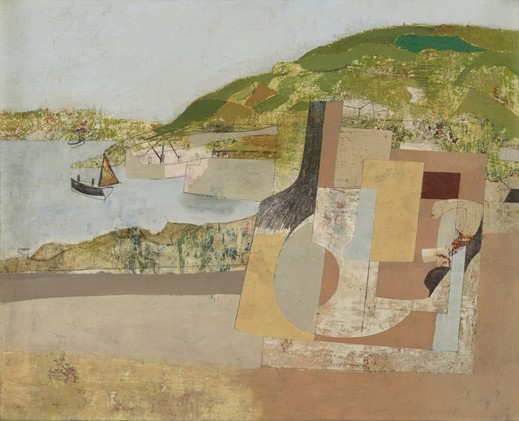
An example of the modern British art toured by the British Council, now part of the Council’s own art collection
To give you an example of that, there was a tour of modern art that the British Council undertook. It was supposed to go from Australia to South Asia in the early 1950s. And it was very abruptly terminated. I thought it was because the British Council as a whole didn’t like presenting modern culture – certainly you get this from some of the historiography, that they’re very much rooted in prestige and tradition. But actually it was terminated simply because the Australian Representative didn’t like modern art. That wasn’t what he saw as his own cultural interest. He much preferred the British Masters – Constable and Turner, and people like that. Once you start approaching it from an angle of ‘what role do individual people play, I think it really nuances studies of how these kinds of particularly transnational organizations are so dependent on who they place where.
Conversely, the British Council hosted a very successful modern art tour through Mexico and Central America at around the same time, and it wasn’t abruptly terminated as the other one was, partly because the Mexican Representative was an amateur painter who liked art. Once you start comparing individual people like that, it really unlocks different ways of thinking about how the organisation functioned as a whole.
Given that you are focusing on the British Council, what has your work told you about Britain’s place in the world in the twentieth century?
Well that’s certainly surprised me. Some of the interviews with people that I’ve had who worked there in ‘70s, ‘80s, ‘90s – that time is very much thought of as a period of post-imperial decline. There’s this fairly dominant view that that’s the period in which Britain’s influence in the world really started to wane.
But, actually, a lot of these people tell quite a different story. They tell a story of nations looking to Britain, looking to replicate what they saw as British standards. Particularly in education, museums, and higher education. A lot of countries were very keen to bring Britain in as a consultative partner and to use their successes in those fields as a benchmark.
So if you look at it purely in purely economic or diplomatic terms, yes it demonstrates a period of decline, but culturally that was a kind of high point for Britain. It was the point at which the British Council was winning some of its largest contracts to, say, help Saudi Arabia establish a network of public libraries, or assist Nepal with its higher education provision. In the cultural field that’s really challenged my view of that declinist narrative that you see.
Maybe we can zoom out a little bit. I wonder what are some historians that you take inspiration from, whose work you find yourself thinking about regularly, or who have taught you things about the practice of History that you hold to heart?
I think probably everybody says this, but I do really think Eric Hobsbawm is a historian who everybody should read as an example of how to make good historical scholarship readable. I appreciate that his very Marxist approach is obviously not to everybody’s taste. But the way in which he constructs his arguments, the way in which he writes about the past, I think in terms of the craft of presenting history and making it accessible – by which I mean not just to non-specialists in academia but to the general public as well – I think that he’s a very good example of somebody to read.
In the field of the British Council, I’m very much influenced by a historian who is based in France at the moment called Alice Byrne. She’s written an awful lot about the British Council’s early years in a way that nobody really has before. She’s much less taken by the official histories that have been written about the organisation. She’s much more interested in interrogating some of those more personal questions that I’m interested in, too.
As you engage with artists and writers, how much do you think about the craft of history from the perspective of writing? What kinds of books do you like, and what kinds of authors do you like, and how does your mind work in those terms?
I think History should be readable. I remember being told once that there are no points for style. One of my old tutors in my Master’s told me that there’s this joke that ‘a historian writes a murder mystery and opens it by saying “in this novel I will show that the butler did it.”’ I understand the need for clarity, exposition, and that kind of thing, but I do think there is a lot to be said for making history readable. In terms of literary figures, I think Kazuo Ishiguro is a really good example of somebody who writes about the very deeply personal but makes it about so much more. I quite like taking that approach to historical scholarship. When you can identify very kind of deeply personal resonant stories and think ‘well, actually, how is this emblematic of the broader culture of the time?’
Do you think that British history writing has played a part in soft power projection?
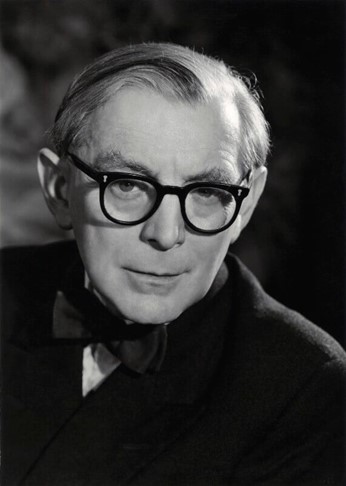
Yes, probably. As I think back now through lists of lectures and things that I’ve seen in the British Council archives, the projection of British history certainly has been utilised for a soft power valence. I don’t know so much about history writing, although some very eminent historians have lectured for the British Council, but I think the impetus to display British history as something that is prestigious, something that’s very traditional, something to be proud of. And also, in the context of the Cold War, this emphasis on Britain’s path to democracy. The idea of parliament being the ‘Mother of Parliaments’; the emphasis on how Britain established this balance between constitutional monarchy and the will of the people without recourse to violent revolution – I think that’s something the British Council really played on heavily.
One final question: how do you think of yourself as a Cambridge historian, and what has Cambridge done to shape your practice?

There’s a very collaborative atmosphere at Cambridge, in the sharing of ideas. The diversity of workshops that graduates can participate in has really enabled me to engage with some different ways and different approaches to studying and understanding the past. I think there’s something about the college model that encourages a kind of conviviality in both a social and an academic sense and it enables people to blend the two together. In fact, even just at a really practical level, the St John’s College archive holds, to my knowledge, the only application form for the British Council in existence. So being at St John’s and being able to access that on the spot, that was that was incredibly useful.
There’s a collegiality and a conviviality I think to being a historian at Cambridge. And I think Cambridge is an institution that is so rooted in its own history that History as a subject flourishes here because of that.
 doinghistoryinpublic.org