


by Elvira Tamus
The Baltic Sea region was an important trading partner for England, Scotland, and then the United Kingdom in the early modern period. In the eighteenth and nineteenth centuries, it supplied naval stores to the Royal Navy. Britain fought for the independence of the Baltic states against the Bolsheviks and the Nazis, and have supported Estonia, Latvia, and Lithuania in their political and military challenges from the 1990s to the present. Despite this past, there is significant ignorance in the UK about the history, languages, societies, and cultures of this area – both in the academic and public spheres.
The Baltic Geopolitics Summer Schools offer a unique opportunity for Cambridge students to enhance their understanding of a region that is of strategic importance in Europe’s current situation. As one of the summer schools’ organisers, I have witnessed the value of this initiative to university students in History.
The summer schools have been organised by the Baltic Geopolitics Programme of the Cambridge Centre for Geopolitics, an interdisciplinary academic research institution and policy think tank that has been seeking since 2015 to consider within their historical contexts the world’s most pressing current geopolitical questions. Such questions are the Russian invasion of Ukraine, the history of the political institutions that make up the ‘four nations’ of the UK Union, policy issues relating to the West Asian region, and power rivalries in Southeast Asia. The Centre applies historical analysis, area studies, political science, and the experience of practitioners to major problems of conflict and world order in four research strands: Europe, Indo-Pacific, Middle East, and Global. The Baltic Geopolitics Programme was established in early 2021 as part of the Centre’s Europe Strand and designed to increase understanding of the geopolitics of the Baltic Sea region and the UK’s role in it. The Programme has convened the Baltic Geopolitics Network to promote stronger relationships with universities and research institutes across the area, build and disseminate knowledge on its history and politics, as well as support academic and student exchanges and develop research collaborations.*
With this in mind, the Programme decided to launch an initiative of summer schools co-organised with other members of the Network. In July 2022, the 1st Baltic Geopolitics Summer School was held in Vilnius, Lithuania, with help from our colleagues at the Faculty of History at Vilnius University. In addition to a rich academic programme, the participants had the chance to spend an interactive workshop in the Lithuanian Special Archives where they learned about their history and collection of documents, with a special focus on the KGB documents department, and had a closer look at specific archival sources. These primary sources included official correspondence, personal letters, documents of interrogations and espionage, as well as a wide range of photographs.
The students were also invited to attend a roundtable discussion on past and present challenges to the Baltic region security, featuring, among others the Lithuanian Minister of Defence and HM British Ambassador to Lithuania (fig.1). The value of having people involved in the political world for attendees with a historical background is the chance to see the various ways in which the analysis and understanding of history can be applied to current political conflicts, competition, and cooperation. In addition, our participants come from a variety of academic backgrounds, and such experiences make them consider how many career avenues their degrees in history, languages, and literature can offer.

In July 2023, our second summer school was organised in Gdańsk, Poland, with the International Border Studies Center at the University of Gdańsk, and the Interdisciplinary Centre for Baltic Sea Region Research at the University of Greifswald. By focusing on border infrastructures changes and socio-cultural impact, we again combined lectures and a variety of extracurricular activities. We visited Malbork Castle where we learned about the history of the Teutonic Order and the Memling Research Centre where we explored Hanseatic Gdańsk. The highlights of this summer school were the guided tours in the World War II Museum and the European Solidarity Center.
Our third summer school returned to Lithuania to offer a programme that took place in Vilnius and Kaunas, another former capital city. The attendees visited the Historical Presidential Palace in Kaunas and had a conversation with the Deputy Minister of the Ministry of Foreign Affairs on Lithuania’s most significant geopolitical concerns and diplomatic pursuits. The main novelty of this year’s curriculum was a talk given by the Officer Commanding of NATO Forward Land Forces Great Britain’s Eagle Troop on how the security apparatus of NATO affects the geopolitics of the Baltic states. This event contributed a novel military perspective to our programme. Similarly to 2022, we took part in a reception at the British Embassy in Vilnius hosted by HM Ambassador to Lithuania.
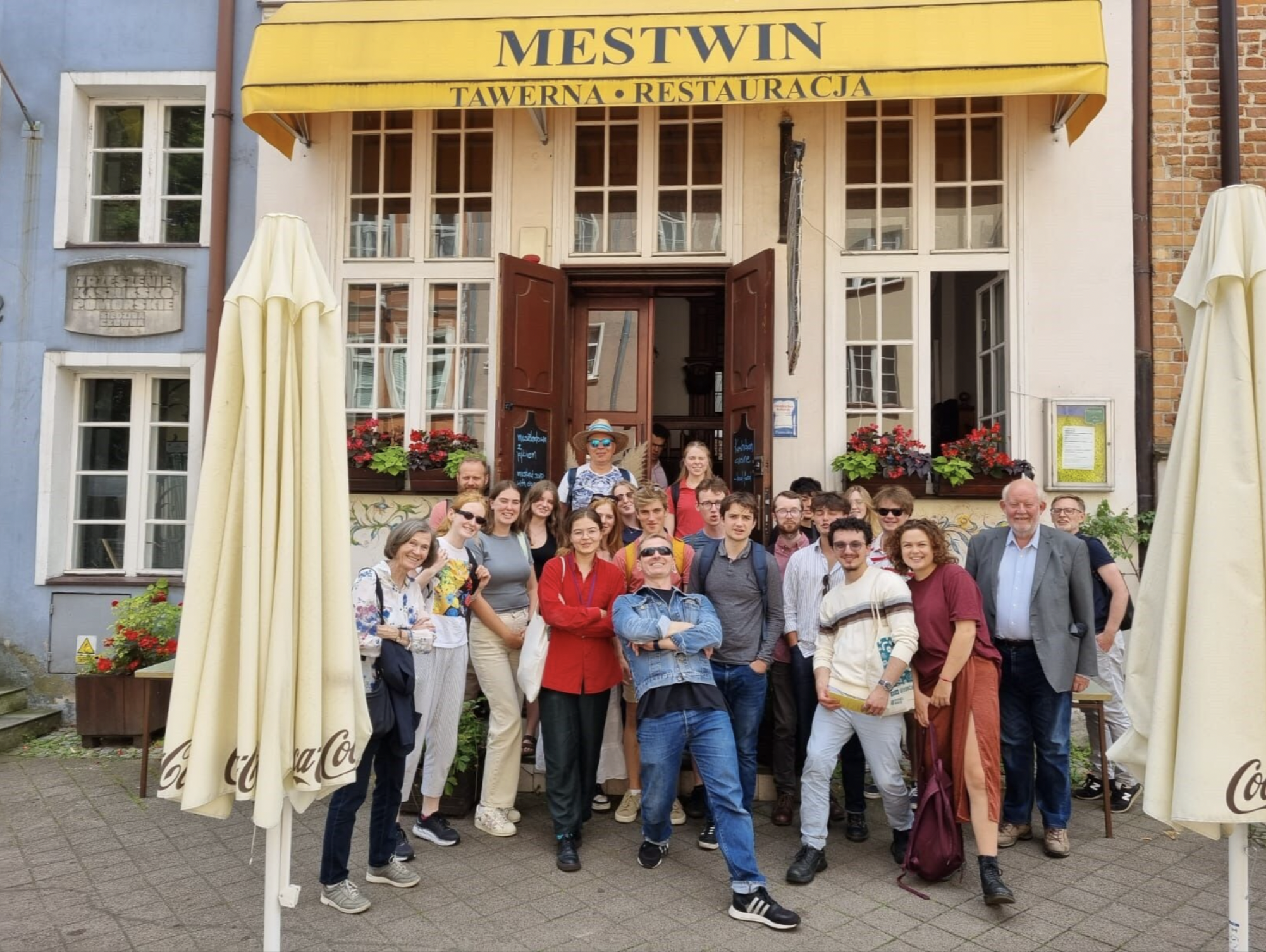
One of the most impactful elements of the summer schools is the diverse cohort. We select students from a wide range of academic backgrounds – undergraduate, Masters, and PhD students in Politics and International Studies; History; Human, Social, and Political Science; Modern and Medieval Languages; English; Law; Management Studies; as well as Asian and Middle Eastern Studies. This composition allows for brainstorming and discussions that would not take place under the circumstances of the students’ usual classroom experience.
Feedback from the three cohorts of our participants have shown that the summer schools have inspired them to consider pursuing PhD projects, learn new languages, encourage family and friends to visit the Baltic Sea region, find job roles that focus on the area, as well as experience new cultures and cuisines.
History graduates with unique academic and professional experiences such as the Baltic Geopolitics Summer Schools are able to demonstrate an understanding of a region that is missing from the UK university curriculum, and yet, plays a vital role in current affairs. This addition to their CVs can broaden the horizon of their career choices and improve their employability.
Historians are trained to search for sources, critically analyse evidence and ideas, form intriguing questions, and present their arguments in a well-organised and compelling way. These skills are extremely useful when discussing the past, present, and future of crucial geopolitical areas like the region of the Baltic Sea.
The Baltic Geopolitics Programme aims to continue organising summer schools and short study trips in the Baltic Sea and the East Central European regions in order to contribute to the preparation of a future generation of young scholars researching this geopolitically crucial part of the world.
*You can read more about the Baltic Geopolitics Summer Schools, the Baltic Geopolitics Programme, and the Cambridge Centre for Geopolitics here:
Photographs: The attached photographs were taken by the organisers of the Baltic Geopolitics Summer Schools and reproduced with their permission.
 doinghistoryinpublic.org