


by Tiéphaine Thomason (@teaphaine)
This is the third post in a three-part series for the Doing History Advent Calendar on the history of the senses and the gifts of the Magi.
Gold is the last of the gifts presented by the Magi. It is often associated with Melchior (and on occasion, Gaspard). The verse associated with gold in the 1857 Christmas Carol ‘We Three Kings of Orient Are’ is possibly the dullest of the lot.
Born a King on Bethlehem plain,
Gold I bring to crown Him again,
King for ever,
Ceasing never
Over us all to reign.
This is quite surprising given the global fascination that gold has held. Famously one of the more sought-after products of the mythical ‘philosopher’s stone’, it also makes appearances in apocryphal tales surrounding historical beauty treatments. (The mistress of Henry II of France (1519-1559), Diane de Poitiers (1500-1566), was rumoured to have consumed liquid gold in order to keep her youth and good looks.) The global fascination with gold means that it has made for rich historiographical discussion. The late Dr Natasha Eaton (1974-2024), known for her work on British and Indian art and material culture, had been working on an exciting project on gold in South Asia. This work would doubtless have been the focus of this post and a fantastic resource for any reader interested in the visual and material history of gold. We direct any curious reader to her wonderful research, in particular Colour, Art and Empire: Visual Culture and the Nomadism of Representation (2013) and, more recently, Travel, Art and Collecting in South Asia: Vertiginous Exchange (2021).
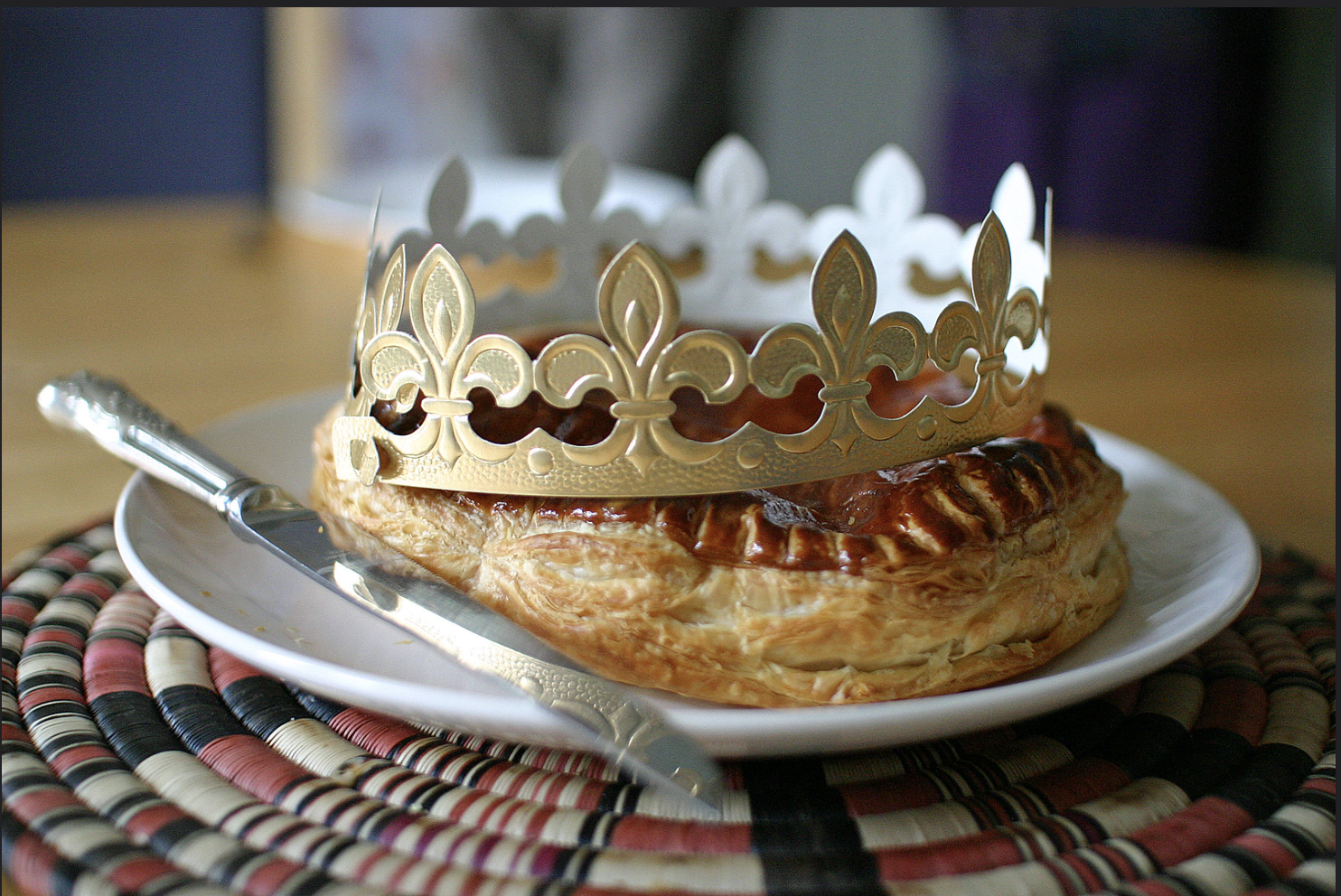
In the spirit of still producing a post loosely related to the senses (or food, rather), this advent calendar was going to include an edible gold recipe. It turns out that this is both difficult and risky to make! I’ve instead suggested a recipe for a ‘galette des rois’ – a ‘king’s cake’ (though it is more like a pie than anything else). Associated with the Three Kings, this gold-coloured dish is a staple in much of the north of metropolitan France around the feast of the Epiphany. A porcelain figurine is hidden within the thick frangipane of the cake. Whoever finds the figurine is crowned king or queen of the day. Slices are distributed ‘fairly’ by having someone hide under the table. This is typically the youngest member of the family, who crouches well out of sight of the dish, and calls out the names of guests to allocate slices of the galette as it is being cut. This tradition (though perhaps not the cake itself) is purported to have its roots in Saturnalia celebrations, for which the Roman historian Tacitus relays a similar tradition.
This is a relatively simple cake of puff pastry, with a buttery, frangipane mixture. The mixture should be quite soft to the touch and flake away a little when poked around in search of the porcelain figurine.
A modern recipe (tried and tested) can be found below. For this, you will need:
- Two rolls of puff pastry, which you can buy pre-made in most supermarkets. (I recommend leaving this out prior to rolling it out.)
- Three eggs (two whole eggs, and one egg yolk)
- 150 g of powdered almonds
- 100 g of caster sugar
- 80 g of butter at room temperature
Pre-heat your oven to 190 °C.
Place your first sheet of puff pastry on some in a round, shallow dish that is oven friendly. (Or, better, a tart mould.) The dish should be lined with greaseproof paper (or butter, if you’re brave). You may need to cut the puff-pastry to match the shape of the dish – keep any off-cuts to decorate the cake/pie. Poke through the pastry with a skewer or a fork to make small holes.
Cream the butter and sugar in a bowl. Add your powdered almonds and two whole eggs. Combine well – this should reach a paste like consistency. Pour the paste into the shallow dish.
Add in a porcelain figurine – if you can’t find one, a porcelain thimble or uncooked fava bean will do.
Cover the dish with the second puff-pastry sheet. Pinch this well around the edges.
With any left-over puff pastry, you may want to make small shapes (stars, leaves, flowers) that you can stick on this second sheet. (Make sure not to cheat – don’t ‘mark the spot’ of the figurine with a shape, your victory in finding the figurine will bring you no joy.)
Brush over with egg yolk to ensure an even, golden colour when cooking.
Bake at 190 °C for 25-35 minutes – do keep an eye on it to avoid any burnt edges.
Let the galette cool and enjoy with friends and family!
 doinghistoryinpublic.org