

by Elvira Tamus (evt27@cam.ac.uk)
Our world is torn apart by a number of military, political, economic, social, and cultural conflicts. Dealing with these situations is the foundation of the Global History Lab (GHL), and educational platform based at the Centre for Research in the Arts, Social Sciences and Humanities (CRASSH) at the University of Cambridge.1 Teaching the same curriculum in a traditional academic setting and in a humanitarian crisis zone shows us several fundamental differences in the learning experience. Simultaneously, it brings together young people from various parts of the globe to think about centuries of human history in peaceful dialogues. In this essay, I look at how these dialogues are built and argue that history ‘from the edge’, in the context of a humanitarian emergency, not only sheds light on differences between our experiences and narratives, but also reveals parallels and connections that we do not appreciate enough ‘at the core’, i.e. the conventional institutional framework of higher education.
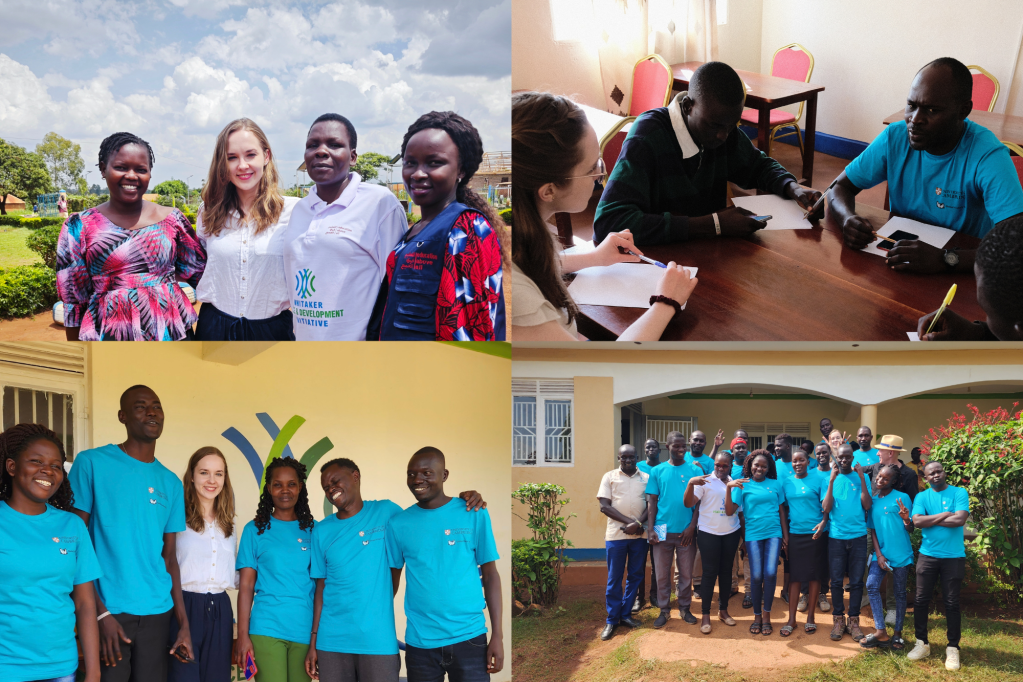
Established in 2012 at Princeton University’s Department of History by Professor Jeremy Adelman, the GHL supports refugee and migrant students in fractured communities who are too often excluded from higher education. The GHL courses have hundreds of participants in Latin America, Africa, Europe, and the Middle East. In the academic year 2023-2024, I was a GHL Teaching Fellow, working with a team of South Sudanese refugees who live in the Kiryandongo Settlement, Uganda. They are supported by the Whitaker Peace & Development Initiative (WPDI), an organisation that aims to promote the values of peace, reconciliation, and social development within communities impacted by conflict and violence.2
First, I taught the ‘History of the World’ course in which we considered global crises between the late medieval period and recent times. During our weekly seminars called ‘Town Halls’, we discussed Prof. Adelman’s lectures and the related chapter from our textbook titled Worlds Together, Worlds Apart.3 With a methodological tool called ‘narrative mapping’, we identified key elements (time, location, actors, global setting and significance) of events and processes to form arguments and understand the forces that pull the world’s parts together and those that drive them apart. Our Case Study classes served our analysis of textual, visual, and material primary sources. Each team followed a track (statelessness; science, medicine, and global health; war; trade and integration; social movements and social change), co-wrote an assignment, and shared their work with all the other teams on an online platform called ‘Gallery’. Students commented on each other’s essays, creating a real global dialogue between learners.
Working with refugees in the ‘statelessness’ track was an enlightening experience. They talked about human rights, treatment, exploitation, slavery, belonging, isolation, eviction, popular mobilisation, partition, home, separation of families, expulsion, extermination, migration, integration, and the everyday challenges of displaced people by referencing their own memories of leaving their home country to look for safety and opportunities in another.
Second, we learned about Qualitative Research Methods, focusing on the aspects of oral history and the know-how of interviews. We had thought-provoking conversations about the ethical issues that might arise when conducting interviews and emphasised that an oral history piece is always a co-production between the one who asks questions and the one who answers them. The third stage comprised individual research, source analysis, and essay-writing. My students looked at water distribution in their refugee settlement, the bride price in traditional marriages in Uganda, girls’ school dropout in Uganda, environmental issues in South Sudan, and struggles for independence in South Sudan, to name a few. The transnational and cross-border perspectives were inherent in their work.
We also faced connectivity issues and clashing commitments. Although my students were provided with data as part of their participation in the course, stable Internet connection was not a given condition in Kiryandongo. During most of the classes, they had their cameras switched off to save data while we were discussing past and present connections across the globe. Uganda is one of the world’s top five countries and the main country in Africa receiving the most people in need of international protection (refugees, asylum-seekers, internally displaced people, and stateless people who are usually not displaced).4 The country aims to integrate the refugees into its local society by providing them with the opportunity to go to university, have jobs, purchase lands, and own possessions. Thus, the Kiryandongo residents are mobile, attending lectures, exams, meetings, and appointments. Some occasionally visit their family in South Sudan. The latter case added an interesting dimension to our conversations about statelessness, mobility, war, integration, poverty, and everyday life.
As a GHL Teaching Fellow, I enhanced my understanding of historical developments in Uganda, South Sudan, and Sudan. I also had the chance to visit the Kiryandongo Refugee Settlement and meet my team. It was an intense, eye-opening, and very fulfilling adventure. After the classes, our hosts took Professor Adelman and me around the settlement to show us the different phases of the refugees’ arrival, distribution, and integration into the community, as well as the venues and buildings serving the residents’ education, work, and everyday life.
So many things we take for granted in traditional academic settings are not available in humanitarian crises. The GHL provides refugees with an opportunity they would not get elsewhere – a safe and encouraging platform for the discussion of the multitude of narratives inherent in past and current affairs. Even more significantly, learners ‘on the edge’ offer a certain input, perspective, experience, that is not understandable without their participation by those ‘at the core’. (Higher) education should be a crucial concern in emergencies, not only to ensure young people affected by conflicts do not miss out on opportunities given to others in safe parts of the world, but also because they represent the generation that has the potential to better understand what is happening around them and take steps towards peace and stability.
- https://www.crassh.cam.ac.uk/research/projects-centres/global-history-lab/ ↩︎
- https://wpdi.org/ ↩︎
- Jeremy Adelman et al. (eds.), Worlds Together, Worlds Apart. Vol. 2: From 1000 CE to the Present, 4th ed. (New York: W.W. Norton & Company, 2014). ↩︎
- https://www.unhcr.org/refugee-statistics ↩︎
 doinghistoryinpublic.org