

By Yuetong Li (Twitter/X: @yuetongli_doris)
Laeta viro gravitas et mentis amabile pondus. (A happy man has a gravity and a lovely weight of mind.) —— Anton Springer 1
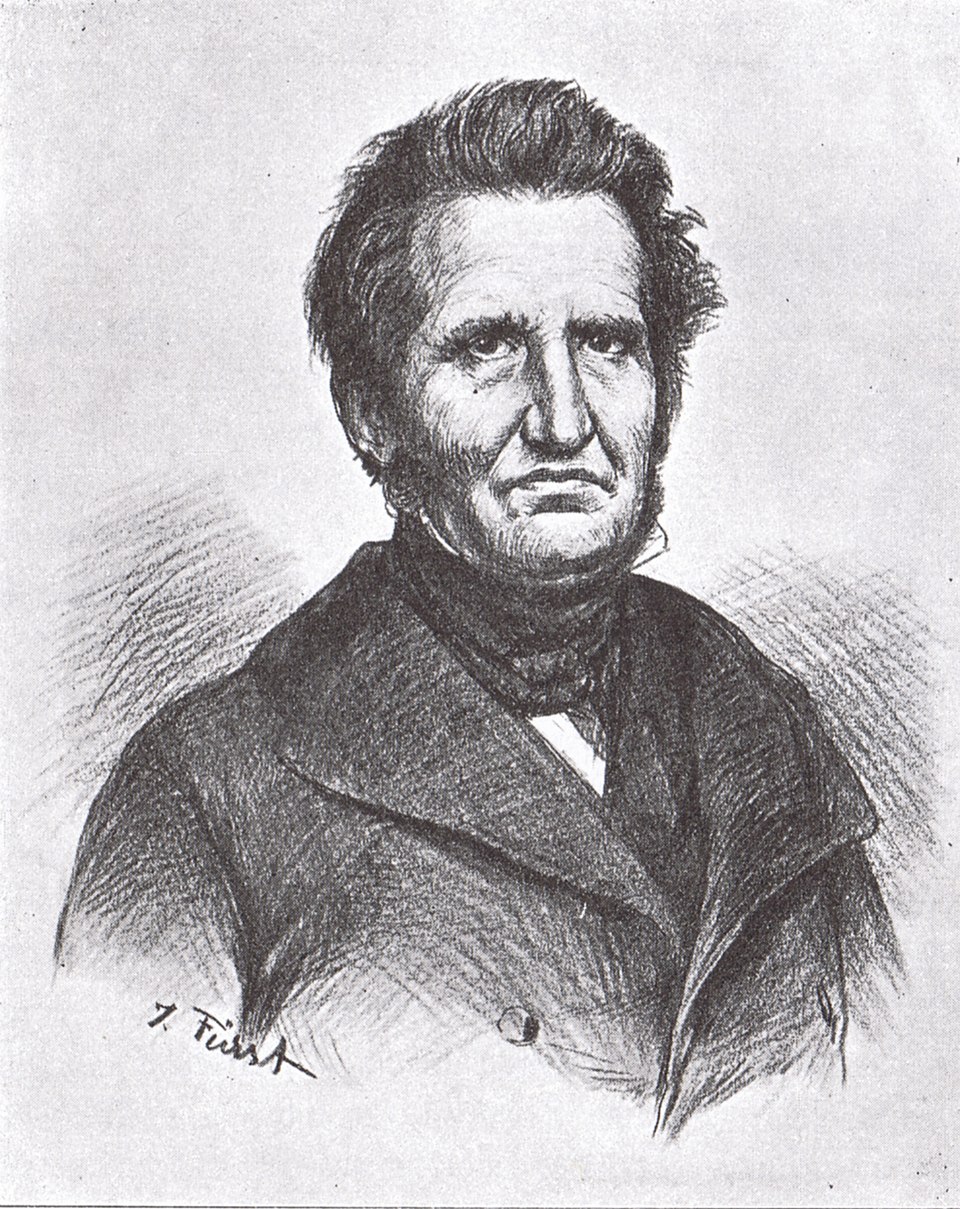
Friedrich Christoph Dahlmann (1785–1860) was a staunch advocate of constitutional monarchy. During the turbulent years surrounding the Frankfurt Parliament, few figures maintained such unwavering commitment to a unified Germany under hereditary, constitutional rule. For this consistency, some contemporaries even described Dahlmann as a dogmatist—a label that, at the time, carried little negative connotation but rather suggested firmness of principle. Yet Dahlmann’s legacy extends beyond political consistency. He stood at several boundaries: between academic and political life, ancient and modern scholarship, and professional and popular forms of writing. In particular, it asks a broader question: why was Dahlmann regarded as the most popular historian in the first half of the nineteenth century? Answering this question reveals not just the contours of one historian’s public reception, but also broader tensions between politics and scholarship, and between historiography and civic engagement in Vormärz Germany.
Dahlmann saw no clear divide between political practice and historical inquiry. In his inaugural address at Bonn University, he argued that “the task of the politician is to draw from the past those institutions of enduring strength, while also recognising the links that must be forged by present action.”2 In other words, he believed that both the past and the present should be treated as essential sources for understanding—and addressing—the challenges facing the modern nation.
Dahlmann first rose to prominence in Göttingen, where he developed the core of his academic worldview. Influenced by his mentor Schlosser, he embraced a Germanic understanding of freedom.3 Later, it was in Bonn where his influence as a teacher reached its peak. Lecturing in Bonn’s largest auditorium, Dahlmann addressed hundreds of students at a time. Many later credited him with having shaped the very foundations of their political and moral thinking.4 As Erwin Nasse later recalled, Dahlmann’s “greatest moral honour, the firm pursuit of the path that was recognised as right, love of country free from all selfishness, unyielding character and a strict sense of justice, the habit of addressing only the noblest aspects of man in writing and speech” were the qualities that earned him admiration across Germany.5 The charisma embedded in his teaching style made him not only a sought-after lecturer, but also a lasting influence on an entire generation of intellectuals.
Dahlmann continued to engage audiences through both lectures and publications, and he maintained a consistent style across these formats. Whether addressing political topics or academic questions, he sought to communicate clearly and candidly, using accessible language to reflect on the past and its relevance to contemporary social issues.6 His dual identity as scholar and statesman was not unusual in the period: like many of his peers, Dahlmann took part in political life, most notably in the Frankfurt Parliament of 1848. The Prince of Prussia praised him for “the magnificence of his conception of the new German conditions… from a genuinely German heart.” 7
His 1835 publication Geschichte von Dännemark (The History of Denmark) is widely regarded as his most significant scholarly achievement. Even on the book’s title page, Dahlmann made his purpose explicit: to interpret political development in light of reason and the conditions of its time.8 At the heart of this work was a rejection of the state-of-nature theories proposed by Locke and Rousseau. Dahlmann refused to view the state as a mechanical product of necessity, contract, or individual will. Instead, as he wrote, the state is “an original order, a necessary state, a faculty of mankind and one of the faculties leading the species to perfection.”9 This vision of the state as an organic and moral institution—not an artificial remedy to human shortcomings—helps explain the unity of Dahlmann’s political and historical thinking. If the state is an expression of human development, then history becomes the medium through which its meaning must be revealed.
In The History of Denmark, that belief shaped not only his choice of subject matter but also the tone and structure of the narrative. Readers were not only informed, but emotionally drawn into the national story. When Dahlmann described Danish naval campaigns, Norwegian peasant uprisings, or legal disputes in Icelandic courts, his accounts were vivid and immediate.10 One particularly striking moment appears in his treatment of the Norwegian resistance to absolutism, where he presents the peasants not as rebels, but as guardians of a deeper legal and moral order. The moral clarity of the episode is unmistakable—and characteristic. Readers often came away with a sharper impression of Dahlmann himself than of the historical figures he described.
In the preface to his Quellenkunde der Deutschen Geschichte (Sources of German History), Dahlmann insisted that history must be more than a collection of antiquarian fragments. For him, it was a living current—one that “must flow into the present, where possible with a fuller current than our Rhine.” By this, he meant that the historian’s task was not merely to preserve the past, but to animate it with present meaning. History, he wrote, should be imbued with “the same spirit that animated the oldest”11 —a reference to the moral and civic energies that, in his view, had shaped the earliest institutions of German political life.
Dahlmann’s popularity as a historian reached its height with the publication of his histories of the English and French revolutions. Among the clearest indicators of their success was the number of reprints—arguably the most reliable measure of a book’s reception by contemporaries. In the case of Dahlmann’s Geschichte der englischen Revolution (History of the English Revolution), included in the two-volume set Zwei Revolutionen (Two Revolutions), the sixth edition appeared in 1853. In the preface, a small-print line clarified that this version was a direct reprint of the fifth edition from 1848, with no changes—an editorial decision made by the publisher rather than Dahlmann himself.12 Similarly, the accompanying volume, Geschichte der französischen Revolution (History of the French Revolution), appeared in its third edition as early as 1847. The preface, dated 1845, matches the year of the first edition, again suggesting that subsequent reprints were publisher-led rather than author-driven.
In a lecture delivered to mark the centenary of Dahlmann’s birth, Ludwig Weiland (1841–1895), then a professor at the University of Göttingen, characterised Dahlmann’s histories of the English and French revolutions as “popular historical writings with a very definite tendency for the present.”13 Although Weiland acknowledged that the works did not represent cutting-edge historical scholarship, he argued that their publication was a striking intervention in the political climate of the Vormärz era.14 As he put it, “the unity of conception, the energy of the realisation of the basic ideas make these writings outstanding achievements in the popular field.” Their reception reflected this judgement: by 1848, the volume on the English Revolution had gone through five editions, while the French Revolution had reached only two. The difference in popularity may have reflected broader ideological patterns. Dahlmann’s account of the English Revolution, with its emphasis on constitutional development and lawful resistance, resonated more comfortably with conservative liberal circles in Vormärz Germany. The French Revolution, by contrast, remained politically volatile, and its association with radical upheaval may have limited the book’s appeal among more cautious readers.
In a nutshell, Dahlmann’s appeal as a historian lay in his ability to combine scholarly purpose with civic engagement. His prose was clear and accessible—shaped by years of teaching and public speaking—and his subjects resonated with the urgent political questions of his time. More than transmitting facts, his works offered moral guidance, historical clarity, and a recognisable authorial voice. It was this blend of narrative energy and political purpose that earned him not only widespread readership, but also lasting influence.
About the Author:
Yuetong Li is a PhD candidate in History at the University of Cambridge and based at Murray Edwards College. Her recent research explores how historical knowledge was popularised in nineteenth-century Germany, focusing on how history was shared, imagined, and circulated beyond academic settings.
References:
- Anton Springer, 1825-1891, a German art historian and writer, and the author of Dahlmann’s bibliography in 1870/72. He wrote this Latin sentence on the title page of this work, which could be regarded as his general critic of Friedrich Dahlmann. ↩︎
- Friedrich Dahlmann, F. C. Dahlmann´s Erster Vortrag an der Rheinishen Hochschule 28. November 1842 (Bonn, 1842), 10. ↩︎
- Ernst Schulin, “Zeitgemäße Historie um 1870: Zu Nietzsche, Burckhardt und ‘Historismus’,” Historische Zeitschrift 281 (2005): 33–58. ↩︎
- Conrad Varrentrapp, “Zur Erinnerung an Friedrich Christoph Dahlmann,” Preussische Jahrbücher 55 (1885): 485–510. ↩︎
- Erwin Nasse, F. C. Dahlmann. Rede gehalten im Auftrag von Rektor und Senat der Rheinischen Friedrich-Wilhelms-Universität am 13. Mai 1885 (Bonn, 1885), 33. ↩︎
- Friedrich Dahlmann, F. C. Dahlmann´s Erster Vortrag an der Rheinishen Hochschule 28. November 1842, 13. ↩︎
- Conrad Varrentrapp, “Zur Erinnerung an Friedrich Christoph Dahlmann,” 485–510. ↩︎
- Ibid. ↩︎
- Friedrich Dahlmann, Geschichte von Dännemark, vol. 1 (Hamburg, 1840). ↩︎
- Erwin Nasse, F. C. Dahlmann, 23. ↩︎
- Friedrich Dahlmann, “Vorwort zur zweiten Auflage,” in F. C. Dahlmann’s Quellenkunde der Deutschen Geschichte, 4th ed., ed. G. Waitz (Göttingen, 1875). ↩︎
- Beside this proof, if the reprinted process is decided by Dahlmann, there would be a new preface instead of the one in this book now, which is written in 1843. ↩︎
- Ludwig Weiland, Friedrich Christoph Dahlmann, 8. ↩︎
- Ibid, 25. ↩︎
Cover image: Friedrich Christoph Dahlmann, 1895. https://commons.wikimedia.org/wiki/File:Friedrich_Christoph_Dahlmann_01.jpg
 doinghistoryinpublic.org
