-
3. The Singapore Stone

By Alasdair Chi The Singapore Stone, as a stele or shards, remains the longest-enduring extant proof of Singapore’s antiquity. Erected by the mouth of the Singapore River by the 13th century, and possibly even earlier, its 52 lines may have recorded the dealings of some great empire or monarch, or perhaps a more prosaic statement of…
-
2. A Renaissance Mirror

By Zoe Farrell (@zoeffarrell) In an age before electrical lighting, in cramped cities with few sources of natural light, mirrors acted as a tool to bring light into homes. They were also decorative, placed alongside paintings to accentuate the splendour of ordinary domestic environments.[1] Venice, and particularly Murano, became the centre of European mirror production during the…
-
Critiquing cultural spaces: an interview with Alice Procter of the Uncomfortable Art Tours

By Alice Procter (@aaprocter) and Mobeen Hussain (@amhuss27) Alice Procter is a historian of material culture based at UCL. She has six years of tour guiding experience at heritage sites and galleries and runs Uncomfortable Art Tours, podcasts and writes under the umbrella of The Exhibitionist. I had the chance to interview you her about her work…
-
Treason law in England from 1351 to the present
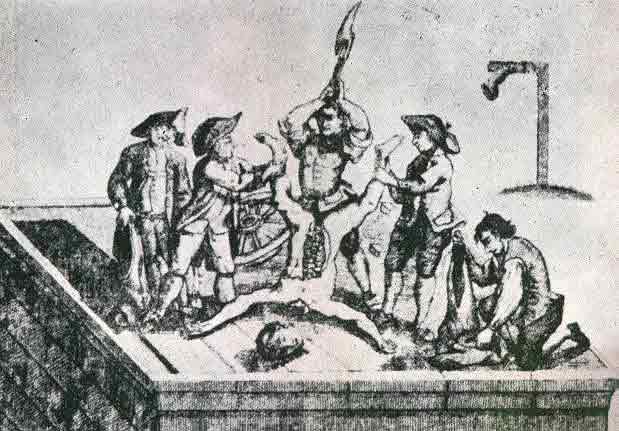
By Stephanie Brown (@StephEmmaBrown) In 1305, William Wallace was hanged, drawn, and beheaded. Notes from the court state that ‘his heart, liver, lungs and all his entrails be cast into the fire and burned’ and ‘his body be cut into four parts.’ His head was to be placed on London Bridge, with each ‘quarter’ of…
-
15. The Iron Cross: a national symbol

By Laura Achtelstetter (@Laura8tel) In my research, the Napoleonic Wars – or Wars of Liberation (1813-15) as they are called in Germany – are a central event. Nearly all of the people I am focusing on fought in these wars, many of them got wounded, lost friends and family members. In testimonies from this time,…

 doinghistoryinpublic.org