-
10. A Portrait of Dr Charles Russell
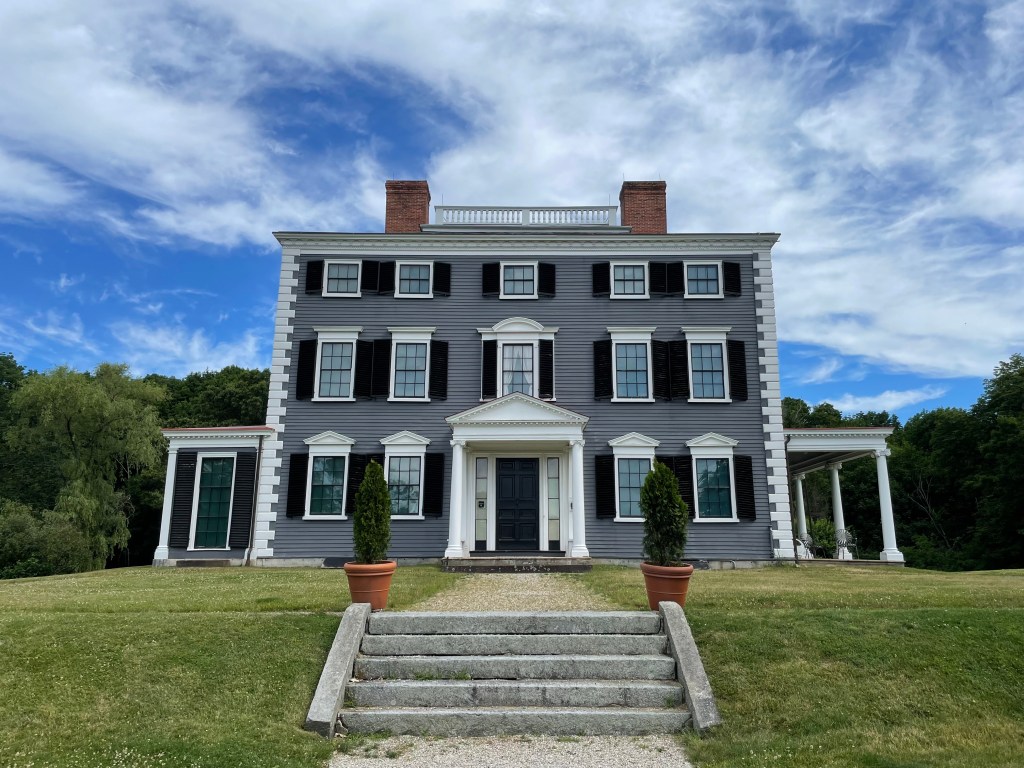
By Shea Hendry Prior to the American Revolution, Dr Charles Russell of Massachusetts owned a thriving medical practice in Charlestown and a sprawling country estate just south of Concord. Direct evidence of Dr Russell’s political leanings is fragmentary prior to the British Army’s ill-fated march into Lexington on April 19, 1775, though as his obituary…
-
11. A Fifteenth-Century Illustrated Shahnama of Firdawsi

By Jacinta Chen (@jchen852) The Shahnama (Book of Kings) (977–1010) of Firdawsi (c. 940–1019/1025) was one of the most celebrated epics of the early modern Persianate world. Courts and individual patrons collected older manuscripts and commissioned copies of their own, giving artists plenty of creative license to experiment with the surrounding landscape, architecture, clothing, and…
-
12. A Boxing Day Retort

By Andi Schubert We find an indignant letter and record of communication between a certain P.A. and the then Archbishop of York, the Rev. William Thompson, in the 26th December 1874 issue of The Spectator.[i] In response to a sermon preached by the Archbishop, the letter protests the “undiscerning contempt or (worse still) the supercilious…
-
13. The Story of a Worldly Southeast Asian Female Informant

By Jess Winstanley John Anderson’s Mission to the East Coast of Sumatra in 1823 reports his voyage to the Pacific commissioned by the British East India Company. Sent out with economic and political briefings, Anderson was not expected to make any commentary on the people he encountered on his travels. However, grounded in the racialised…
-
14. The Christmas Eve of 1647 in the Journal des Jésuites

By Weiao Xing (@WeiaoX) ‘On Christmas Eve, at night, we assembled as usual, that is to say, at half past eleven; we sang hymns and canticles […]’. In 1647 in Québec, a group of French Jesuits gathered, probably illuminated by candlelight, chanting a repertoire of sacred songs to celebrate Christmas. ‘At the end of Te Deum,…

 doinghistoryinpublic.org