-
21. The Seal of Robert Fitzwalter

By Savannah Pine (@savannah_pine) Robert Fitzwalter’s seal-matrix is a typical early-thirteenth-century seal-matrix. Its imagery proclaims his identity through an equestrian figure brandishing a sword, which represents that he was a part of the elite warrior class, and through a shield displaying his coat-of-arms (a fess between two chevrons), which signifies his membership within a familial…
-
17. Commemorative Button Badge of General Roberts
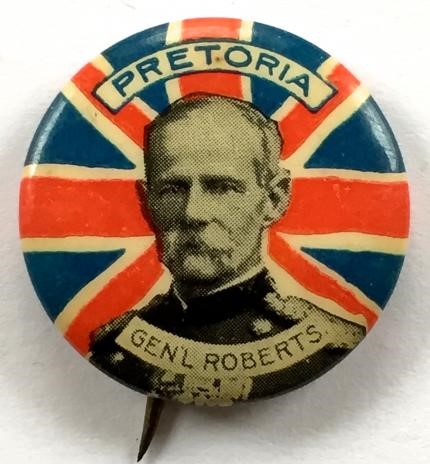
By Helen Sunderland (@hl_sunderland) The Second Boer War of 1899-1902 is renowned for raising popular imperialist fervour to new heights in Britain. Extravagant public rejoicing marked key turning points in the conflict. Most notoriously, uproarious celebrations followed the Relief of Mafeking in May 1900, even coining a new term in the English language. Historians continue to debate…
-
18. Franklin D. Roosevelt’s Wheelchair

By Clemency Hinton (@clemencyhinton) This wooden wheelchair was the often invisible, but invaluable, aid to President Franklin Roosevelt during his years of political prominence. Cobbled together from a standard kitchen chair with bicycle wheels attached, this wheelchair was designed to be discreet, light and mobile. Unlike the bulky and obtrusive counterparts of its time, this wheelchair…
-
20. John’s Leaves and Elizabeth’s Flowers

By Maggie Kalenak Botanical specimens like the ones pictured can be found in archives all over the U.K., delighting the unsuspecting reader by tumbling out of 19th century envelopes. Whether to a family member, friend or sweetheart, flowers and leaves were frequently tucked into letters to further personalise the experience of their recipients. In the…
-
22. ‘Against Idleness’ Mug
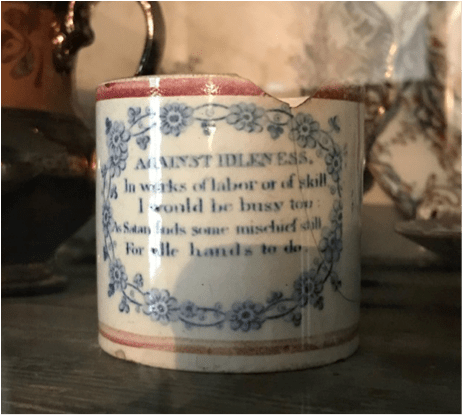
By Meg Roberts (@megeroberts) In the eighteenth and nineteenth centuries, as industry and population swelled, an enduring fear of ‘idleness’ as a morally corrupting and irresponsible vice took on new significance in both Britain and America. This fear could almost be described as an obsession. Across print and material culture throughout this period, the indolence of…

 doinghistoryinpublic.org