-
5. Lieve Verschuier’s ‘Tail Star (Comet) over Rotterdam’

By Lavinia Gambini (https://cambridge.academia.edu/LaviniaGambini) For early modern contemporaries, comets were not only associated with the birth of Christ. Comets possessed an eschatological dimension and had often been considered signs of imminent catastrophes, such as the Thirty Years’ War.[1] The celestial phenomenon also retained its apocalyptic dimension in the ‘Scientific Revolution’, when in Cambridge the Lucasian…
-
7. The Pot on the Windowsill
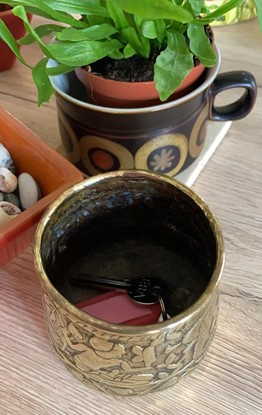
By William Gaby Towards the end of a telephone conversation with my grandmother a few weeks ago, I was startled by a surprising revelation. As if a fleeting afterthought, she revealed that her mother had recorded an oral history in the early 2000s. “It was only a very amateur recording – I can’t imagine it…
-
8. A Pack of Playing Cards depicting the ‘Popish Plot’ (ca. 1679)
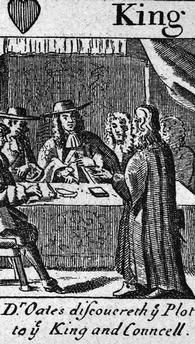
By Basil Bowdler (@BasilBowdler) Playing cards were meant for much more than games in late seventeenth century England. They flourished as a medium for conveying political events and (mis)information. This particular pack, which was illustrated by Francis Barlow, details the ‘Popish Plot’ (1678-81): a fictitious conspiracy alleging that an extensive cabal of Catholics were plotting…
-
1. An Anti-Communist Newspaper
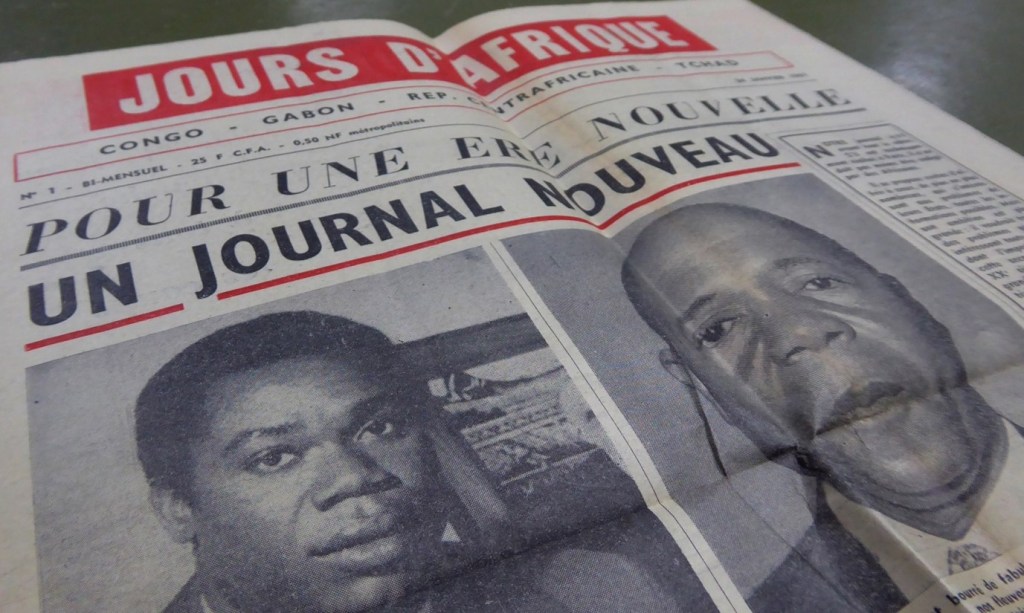
By Alex White (@alex_j_white) The first issue of Jours d’Afrique [‘African Days’] hails itself as ‘a new newspaper for a new era’. [1] This is a fair claim: the journal was published in January 1961, only months after the decolonisation of French Equatorial Africa. Grainy photographs of new presidents stare down from the front page…
-
2. The Honours of Scotland

By Lewis Younie (@Lewis_Younie) The Honours of Scotland, better known as Britain’s oldest surviving crown jewels, were crafted in the late 15th and early 16th century. Comprised of a crown, a sceptre, and a sword, the regalia’s history has intertwined with that of the Scottish nation for centuries. The Honours’ physical appearance does not demand…

 doinghistoryinpublic.org