-
David Lyndsay’s Ane Satyre of the Thrie Estatis

By Kate McGregor (@ks_mcgregor) David Lyndsay is perhaps Scotland’s best, but least well known, poet and playwright.[1] Yet his work both reflects the vibrant culture of early modern Scotland and the deeply political ramifications drama could have during this period. One could imagine that the performance of a play written by Lyndsay was an eagerly…
-
George Severs – Historian Highlight

By George Severs (@GeorgeSevers10) & Cherish Watton (@CherishWatton), Series Editor Historian Highlight is a new series sharing the research experiences of historians in the History Faculty in Cambridge. We ask students how they came to research their topic, their favourite archival find, as well as the best (and worst) advice they’ve received as academics in training.…
-
Women of the Manhattan Project
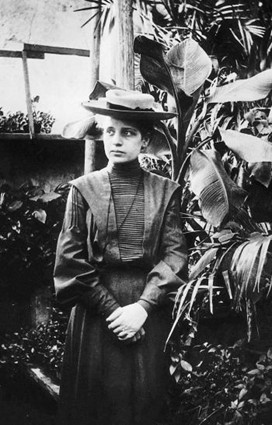
By Evangeline Leggatt (@evie_leggatt) Traditional narratives of the Manhattan Project emphasise a group of heroic white male physicists in the United States who succeeded in creating, testing, and using the world’s first atomic weapons. Perhaps the most recognisable figure in atomic history was the project’s scientific leader, Dr J. R. Oppenheimer. Other prominent male figures…
-
Grace Whorrall-Campbell – Historian Highlight
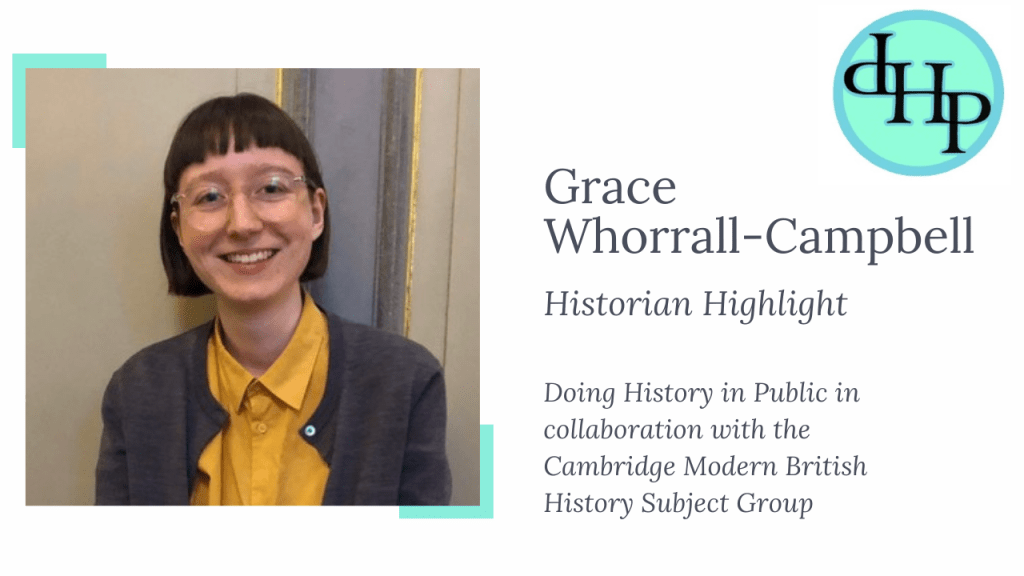
By Grace Whorrall-Campbell, interviewed by Cherish Watton (@CherishWatton), Series Editor Historian Highlight is a new series sharing the research experiences of historians in the History Faculty in Cambridge. We ask students how they came to research their topic, their favourite archival find, as well as the best (and worst) advice they’ve received as academics in…
-
Smartphones in the archive

By Davide Martino (@DavideMartinoDM) ‘Writing this book would not have been possible without Samsung, whose phone was of invaluable help.’ If acknowledgments were an honest reflection of the research process, a similar sentence would probably feature in most scholarly works of the last decade. Though pencil and paper, as well as our eyes and hands,…

 doinghistoryinpublic.org