-
Dying Declarations – Last Words in the hands of Historians

By Alex Wakelam @A_Wakelam In May 1906 the great Norwegian playwright Henrik Ibsen lay in his sick bed. That evening an old friend arrived from town to see the aged tragedian. Entering the room he greeted the nurse with “How is Mr Ibsen today?” “Oh”, she cheerily replied, “he’s doing much better.” At this Ibsen sat up…
-
Wanted: A More Complicated History of Belgium’s Congolese ‘Heart of Darkness’

by Eva Schalbroeck Whenever I say that I study the history of Belgian imperialism in the Congo, most people confess to not knowing that Belgium had a colony. Others describe it as a particularly nasty and violent episode’. My explanations of ‘it’s far less black-and-white’ or ‘it’s complicated’ often confuse more than they illuminate. Popular media…
-
‘Our story remains unwritten’: the ethics of writing histories across cultures

by Tom Smith What does it mean to write a history of a culture other than our own, and how do we do this sensitively? This is an issue upon which historians rarely reflect explicitly. My dual passions for American history and Pacific Ocean history have been fuelled not by any particular personal investment or…
-
Marian Mason: England’s Trailblazing Woman of Fitness
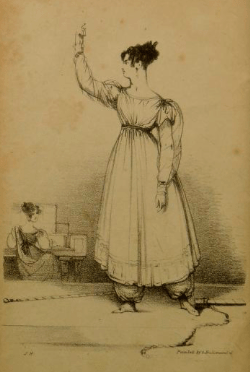
By Conor Heffernan Although sporting historians have long noted the importance of English women in the development of sport in general, few studies have devoted themselves to the study of gymnastic exercise systems such as callisthenics. This has done a great injustice to Marian Mason, England’s first female physical fitness instructor who, beginning in the…
-
The Unbearable Failure of Looking

By Ivana Dizdar (@ivana_dizdar) An Arctic seascape. A shipwreck. Polar bears devouring human flesh. This is the scene British artist Edwin Landseer depicts in his 1864 painting Man Proposes, God Disposes. The action takes place within a landscape of glaciers and ice: cold, hard, and jagged. The environment is inhospitable and threatening, just like the feast…

 doinghistoryinpublic.org