-
The Welsh Dadolwch and Princely Favour

By Kit Treadwell (ct578@cam.ac.uk) Dating from the middle of the twelfth century to the middle of the thirteenth, seven Welsh poems bear the title element dadolwch (appeasement, reconciliation).[1] These seven poems — unique enough to bear their own genre term — may well belie a larger but inextant tradition. Regardless, working with what we have reveals the pitfalls…
-
More Gravy than Grave

Christmas has always been fabled for its moreish cuisine. From Tudor feats of venison, boar, and beef, to today’s lean gobblers, the feast of St. Christ has been through quite a few meaty reincarnations. Once upon a midnight festive, the sight of arching swans or flamboyant peacocks would have been standard fare at Christmas. This…
-
Richard of York gave battle in vain

By Ben Oldham (bo286@cantab.ac.uk) Christmas is not usually a time for warfare, but in the Wars of the Roses, despite the sanctity of the festive season, the opportunity to cut the head off a rival branch was not one to be missed. In December 1460, Richard, duke of York kept Christmas at Sandal Castle: a…
-
On the Thirteenth Day of Christmas

Gifts are about as Christmasy a tradition as one can have — to give and share is at the heart of the enterprise (be it Dickensian or Coca-Colanian). But what is the appropriate juncture at which said gifts and sharables are to be gifted and shared? For most of the Anglophone world, the answer might…
-
Market Day
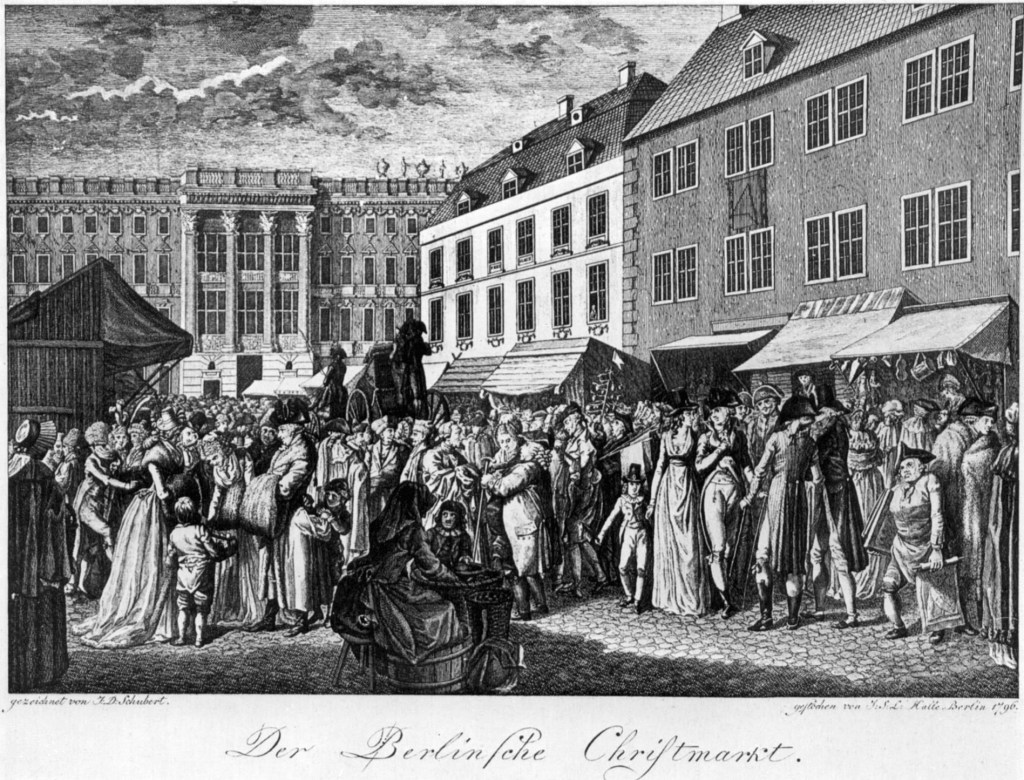
At the turn of the hour when the days start lengthening again, the Christmas Markets come! Of all German contributions to Winterval festivities this one is perhaps the most unusual. While Tannenbaums and advent wreathes and a host of Christmas curios have arguably rather ancient origins, the mid-winter market is a decidedly more recent affair.…

 doinghistoryinpublic.org