-
The Public House – the struggle to find privacy in the eighteenth century home

By Alex Wakelam – @A_Wakelam Around two o’clock in the morning of February 15th 1732, Robert Atkinson, a sadler, returned home drunk from the alehouse. His mother Ann Atkinson, having sent the maid to bed at midnight, had sat up to wait for him so that she could lock the door behind him (the symbolic ending of the…
-
Staging history: “Kepler’s Trial” by Tim Watts

Harriet Lyon (@HarrietLyon) reviews the recent world premiere of Kepler’s Trial: An Opera by Tim Watts based on Ulinka Rublack’s book The Astronomer & the Witch. In December 1615, the renowned astronomer Johannes Kepler first received news that his elderly mother, Katharina, had been accused by a neighbour of witchcraft. A victim of the witch craze that swept through…
-
Staging History: Mary Stuart
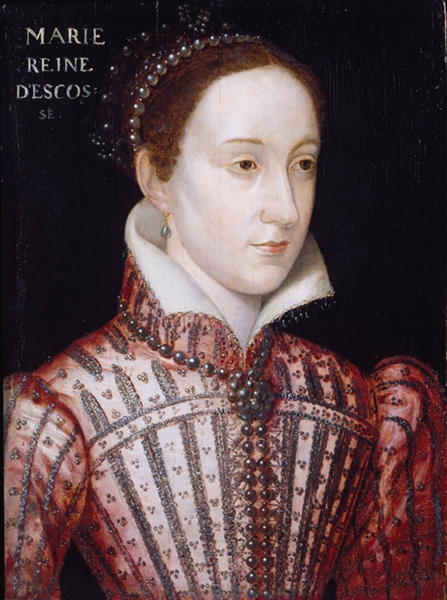
Harriet Lyon (@HarrietLyon) reviews Friedrich Schiller’s play Mary Stuart, adapted and directed by Robert Icke. What is history if not a series of contingencies? For every thing that happens, an infinite number of other possibilities are extinguished. But what if things had been different? Although writing history certainly involves a good dose of imagination, academic historians have…
-
Bagging a bargain in the Renaissance: questions surrounding the ethics of shopping and consumption

By Zoe Farrell (@zoeffarrell) In recent rhetoric, the ‘rise’ of consumerism has been challenged. Our throw-away culture has led to a multitude of problems for the environment, as well as issues surrounding body-image, debt and over-corporatisation. In a recent article, George Monbiot, for example, argued that ‘regardless of what we consume, the sheer volume of…
-
‘[W]ho so wyl a gardener be’: arboriculture in late medieval and early modern commonplace books
![‘[W]ho so wyl a gardener be’: arboriculture in late medieval and early modern commonplace books](https://doinghistoryinpublic.org/wp-content/uploads/2018/09/gardening-1.jpg?w=448)
By Laura Flannigan (@LFlannigan17) Recently, while on the hunt for signs of the reception and expression of legal ideas and practice in late medieval and early modern writing, I had cause to dip into some of the commonplace books surviving from the period. A ‘commonplace book’ has been generally classed by historians as an idiosyncratic, miscellaneous compilation…

 doinghistoryinpublic.org