-
Did Edward III Obey His Own Rules on Parties?

-
Charmaine Au-Yeung – Historian Highlight
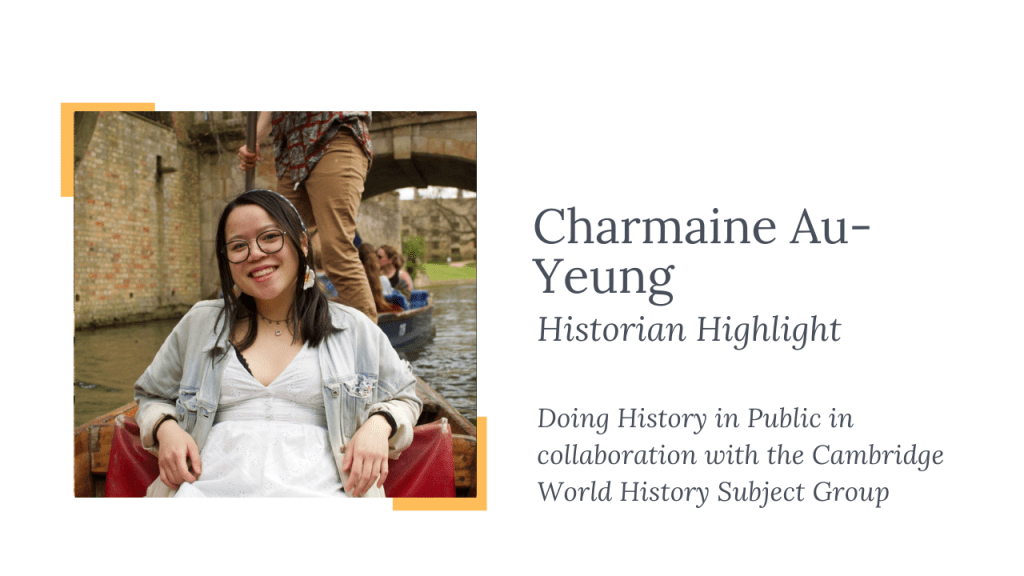
Charmaine Au-Yeung (@steamedbaos), interviewed by Alex White (@alex_j_white) Historian Highlight is an ongoing series sharing the research experiences of historians in the History Faculty in Cambridge. We ask students how they came to research their topic, their favourite archival find, as well as the best (and worst) advice they’ve received as academics in training. History…
-
10. Cooking with Chestnuts in Winter

by Weiao Xing (@WeiaoX) ‘Fresh raw chestnuts are in season in the winter months. Choose heavy nuts with tight-fitting shells’; this is how the celebrated trio of cookery writers Simone Beck, Louisette Bertholle, and Julia Child introduce this ingredient in their influential work Mastering the Art of French Cooking.[i] With an emphasis on ‘fresh produce and ingredients’,…
-
19. To Make Milk Punch

By Tomas Brown Recipes for milk punch are intriguingly elusive; in one early nineteenth century receipt book they are found nestled among the ‘German method of Blackening Leather’, ‘Dr Fullers Vapour for a Quincy’ and ‘Fine Red Ink’.[1] They present themselves to us pervaded by logistic and cultural incongruities. Are they recreational or medicinal? Hot…
-
Victorian Vegetarians: Nineteenth-Century Christmas Puddings (veggie edition)

By Fabia Buescher (fb586@cam.ac.uk) Christmas in the nineteenth-century was, as it is today, a time for celebrating, laughing and eating together. To such conviviality, a lavish Christmas dinner couldn’t go amiss. The Victorian Christmas tables were filled with mince pies, Christmas puddings and roasted meat, including turkey, beef and goose. Yet not everybody chose to…

 doinghistoryinpublic.org