-
‘Our story remains unwritten’: the ethics of writing histories across cultures

by Tom Smith What does it mean to write a history of a culture other than our own, and how do we do this sensitively? This is an issue upon which historians rarely reflect explicitly. My dual passions for American history and Pacific Ocean history have been fuelled not by any particular personal investment or…
-
The Making of Dürer’s Rhinoceros

by Eleanor Russell This famous sketch of a rhinoceros was created in 1515 by the influential German artist, Albrecht Dürer, reflecting the growing interest in foreign curiosities that had emerged in tangent with the overseas voyages of exploration, commerce and conquest by the Spanish and Portuguese. The rhinoceros had been given as a gift by the…
-
Constructing an archive: a reflection on British Library collections
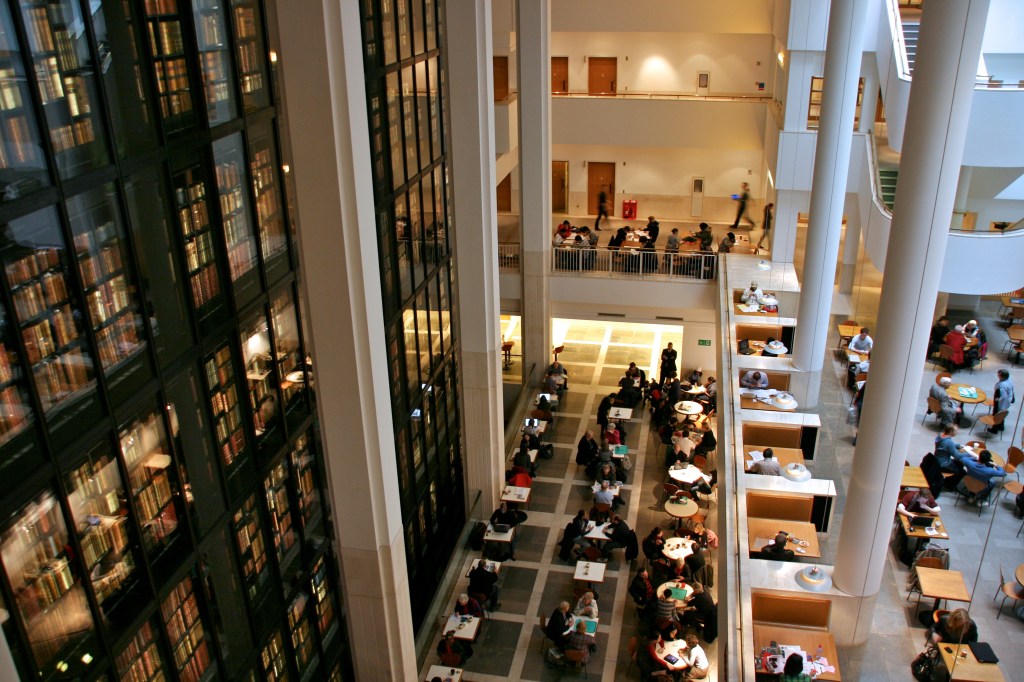
By Mobeen Hussain (@amhuss27) As historians, we are often used to thinking about an archive as a fixed set of documents kept in a static physical location. An appropriate historical source is often considered as such only if it can be verified by ‘real’ material from a ‘real’ archive.[1] Yet, archives mean different things to different researchers.…
-
World at their Feet: The World Cup and History

By Tom Smith (@TomEtesonSmith) For any football fan, and even for many who don’t usually indulge in the ‘beautiful game’, the arrival of the World Cup every four years provides pure escapism. Even in England, the disappointment of a predictable penalty shoot-out defeat is assuaged by the tournament’s association with long hot summer days, the colours…
-
Doing Family History from Byzantium through Today

By Ana Núñez (@anac4_nunez) The Byzantine princess Anna Komnene (1083-1153) appears to have been a most devoted daughter. The first-born of the Byzantine Emperor Alexios I Komnenos (r.1081-1118), Anna took it upon herself to continue the work started by her late husband, Nikephoros Bryennios, and write a history (The Alexiad) of her father’s eventful…

 doinghistoryinpublic.org