

Noam Bizan (nb705@cam.ac.uk)
In 1974, Andrei Sakharov published an article in the West, “Tomorrow: The View From Red Square,” envisioning what the world might look like in fifty years1. Now that 2024 has ended, we can reflect on how his predictions for international affairs have unfolded. To what extent do they still resonate today?
Sakharov is arguably the most famous of Soviet dissidents—a group of intellectuals who, beginning in the 1960s, called for reform of the Soviet regime with unprecedented openness. A leading nuclear physicist, Sakharov rose to international prominence in 1968 for warning about the existential threat posed by nuclear weapons,2 and received the Nobel Peace Prize in 1975 for his human rights activism.
Many of Sakharov’s predictions for the world order in 2024 ring true, evidence that while the Cold War ostensibly ended over thirty years ago, its legacy remains ever-present.
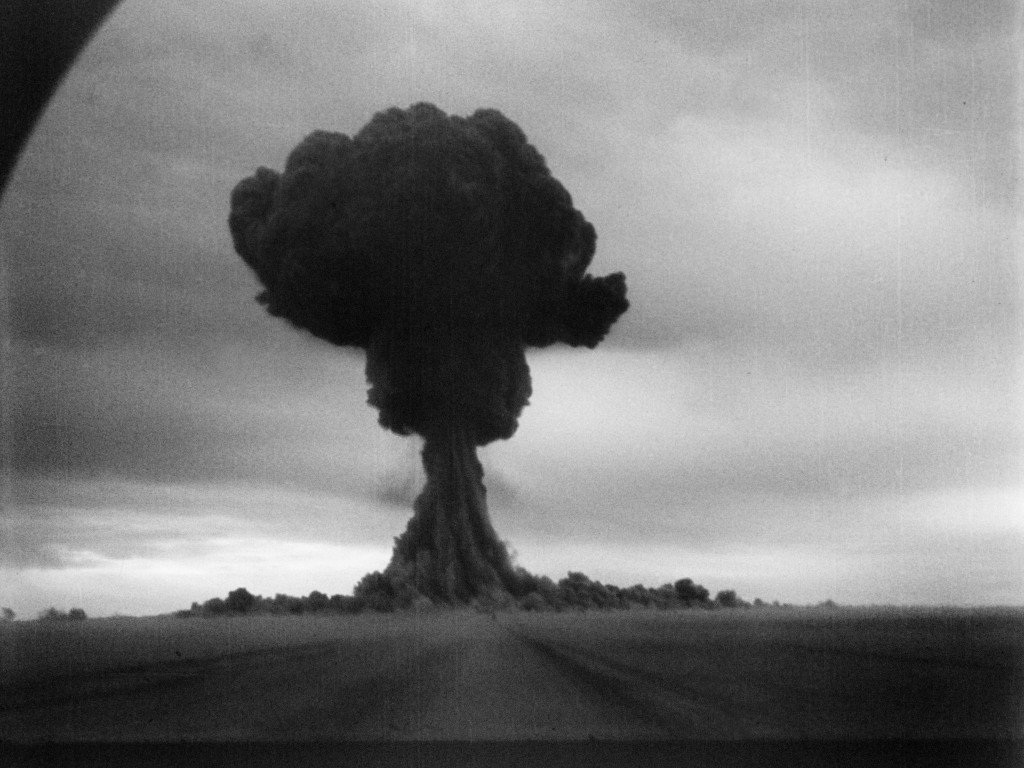
Read more: Back to the Future? Assessing Andrei Sakharov’s Predictions for the World Order in 2024Sakharov stressed that the most pressing danger of the next fifty years was nuclear holocaust. Luckily for us, nuclear war did not break out by 2024, but the Doomsday Clock is currently 89 seconds to midnight—a dramatic change from 9 minutes to midnight in 1974.3 Since its full-scale invasion of Ukraine in February 2022, Russia has suspended or withdrawn from multiple arms control treaties4 and deployed nuclear weapons in Belarus.5 China expanded its nuclear arsenal6 and tested an intercontinental ballistic missile over the Pacific Ocean for the first time since 1980.7 The US estimated in summer 2024 that Iran was a couple of weeks away from producing enough enriched uranium for a nuclear weapon.8 And, in light of North Korea sending troops to support Russia in Ukraine, it appears likely that Russia is providing aid to North Korea to further develop its nuclear program.9 In light of such developments within the new so-called ‘axis of evil’ of Russia, China, Iran, and North Korea, Sakharov’s warning that the threat of nuclear warfare would persist “as long as thermonuclear missiles and hostile and suspicious governments and groups of governments exist” was unfortunately very prescient.
Sakharov also warned of “the decline of personal and governmental morality,” which would manifest in “the disintegration of the basic ideals of law and justice” and “nationalist and political terrorism.” This is also an eerily accurate reflection of the state of global affairs in 2024. Freedom House reported that global freedom had declined for the 18th consecutive year.10 Indeed, there were manipulated elections in countries around the world; ongoing war and terrorism including in Ukraine, the Israel-Hamas war and hostage crisis, a civil war in Myanmar, and a civil war in Sudan; government suppression of pluralism, such as the violent crackdown on Georgian protesters and journalists;11 the far-right’s rise in Europe;12 and the threat to democracy in the United States.13 Sakharov noted that these problems were especially prominent in the socialist countries. Although the socialist bloc no longer exists—the demise of which no one, not even Sakharov, foresaw in 1974—today the post-Soviet countries indeed continue struggling to uphold democracy.14
How to counter these dismal trends? Sakharov believed it was crucial “to halt the disintegration of the world into antagonistic groups of states.” In his view, this would be achieved through “the convergence of the socialist and capitalist systems,” which, of course, does not hold up in the post-Soviet world. However, this convergence would be accompanied by “demilitarization, the strengthening of international trust, and the defense of human rights, law, and freedom.” Many of the structures that Sakharov believed could lead to such social progress are in place, including the United Nations, Red Cross, World Health Organization, and Amnesty International, but today they are riddled with bias and disagreement that hinders their effectiveness.15 Indeed, the world is diverging into multipolarity, rather than converging.16
Sakharov concluded his essay with the view that humankind’s progress cannot be reversed, unless through dramatic events such as nuclear holocaust, famine, or an epidemic. However, this is not as optimistic a prognosis as it may seem. Indeed, COVID-19 was such an epidemic, which set back progress on a range of issues, from sustainability to poverty to childhood education.17 Now, with US President Donald Trump catering to Russian President Vladimir Putin over the war in Ukraine18 and weakening American alliances with Europe,19 the world seems as far from convergence as ever. The dangers that Sakharov warned of in 1974 remain in much the same form today—with the essential difference that the US is pivoting towards its old Cold War rival Russia. To play on the old Soviet expression, today’s international order is “different in form, same in content” as fifty years ago.
Endnotes:
- Andrei Sakharov, “Tomorrow: The View from Red Square,” Saturday Review 1, no. 25 (August 24, 1974). ↩︎
- Andrei Sakharov, “Thoughts on Progress, Peaceful Coexistence and Intellectual Freedom,” New York Times, July 22, 1968. ↩︎
- “The Clock Shifts,” Doomsday Clock, The Bulletin of Atomic Scientists, accessed February 23, 2025. ↩︎
- Heather Williams, “Russia Suspends New START and Increases Nuclear Risks,” CSIS, February 23, 2023; Maxim Starchak, “Russia’s Withdrawal From the Nuclear Test Ban Treaty is an Own Goal,” Carnegie Endowment, October 24, 2023. ↩︎
- Jack Detsch and Robbie Gramer, “Russia’s Nuclear Weapons Are Now in Belarus,” Foreign Policy, March 14, 2024. ↩︎
- Shizuka Kuramitsu, “Pentagon Says Chinese Nuclear Arsenal Still Growing,” Arms Control Association, January-February 2025. ↩︎
- Shizuka Kuramitsu, “China Conducts Rare ICBM Test Over Pacific,” Arms Control Association, November 2024. ↩︎
- Jennifer Hansler and Kylie Atwood, “Blinken says Iran’s nuclear weapon breakout time is probably down to 1-2 weeks,” CNN, July 19, 2024. ↩︎
- Edward Howell, “North Korea and Russia’s dangerous partnership,” Chatham House, December 4, 2024. ↩︎
- “Freedom in the World: 2024,” Freedom House, February 2024. ↩︎
- “Georgia: Authorities using draconian new laws to crack down on dissent,” Amnesty International, January 13, 2025. ↩︎
- Raf Casert, Lorne Cooke, and Samuel Petrequin, “The far right’s election gains rattle EU’s traditional powers, leading Macron to call snap polls,” AP News, June 10, 2024; Paul Kirby, “Germany’s Conservatives Celebrate, but Far Right Enjoy Record Results,” BBC, February 24, 2025. ↩︎
- Jonathan Katz and Eric Urby, “Dangerous cracks in US democracy pillars,” Brookings Institution, February 13, 2025. ↩︎
- Michael Abramowitz, interview by Steve Inskeep, “Decades after the USSR collapsed, Eurasian countries struggle to maintain democracy,” NPR Morning Edition, April 20, 2022. ↩︎
- Oona A. Hathaway and Stewart Patrick, “Can the UN Security Council Still Help Keep the Peace? Reassessing Its Role, Relevance, and Potential for Reform,” Carnegie Endowment, July 2, 2024. ↩︎
- Daniel F. Runde and Austin Hardman, “Great Power Competition in the Multilateral System,” CSIS, October 23, 2024. ↩︎
- H. Yuan, X. Wang, and L. Gao, “Progress towards the Sustainable Development Goals has been slowed by indirect effects of the COVID-19 pandemic,” Communications, Earth & Environment 4, no. 184 (2023); Fabian Mendes Ramos and Jaime Lara, “COVID-19 and poverty vulnerability,” Brookings Institution, May 18, 2022; Claire Cain Miller and Sarah Mervosh, “The Youngest Pandemic Children Are Now in School, and Struggling,” New York Times, July 1, 2024. ↩︎
- Paul Sonne, “Three years into war in Ukraine, Trump ushers in new world for Putin,” New York Times, February 25, 2025. ↩︎
- Rym Momtaz, “Taking the Pulse: Is the Transatlantic Relationship at a Breaking Point?”, Carnegie Endowment, February 20, 2025. ↩︎
Image:
First Soviet atomic bomb. Retrieved from: https://www.britannica.com/technology/nuclear-weapon/The-Soviet-Union
 doinghistoryinpublic.org