-
Constructing an archive: a reflection on British Library collections
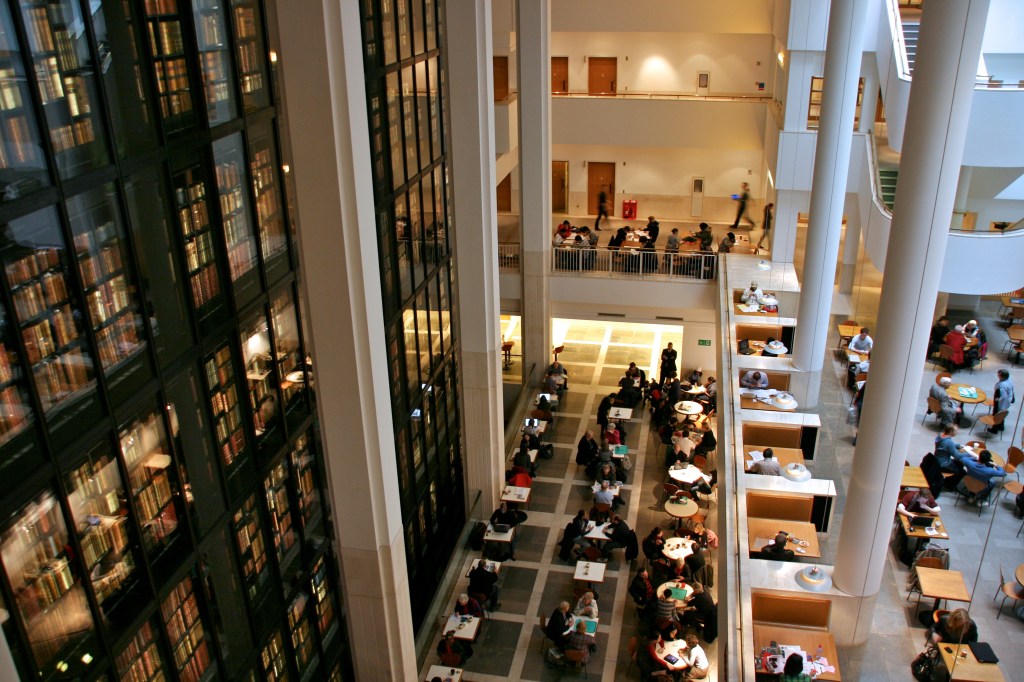
By Mobeen Hussain (@amhuss27) As historians, we are often used to thinking about an archive as a fixed set of documents kept in a static physical location. An appropriate historical source is often considered as such only if it can be verified by ‘real’ material from a ‘real’ archive.[1] Yet, archives mean different things to different researchers.…
-
World at their Feet: The World Cup and History

By Tom Smith (@TomEtesonSmith) For any football fan, and even for many who don’t usually indulge in the ‘beautiful game’, the arrival of the World Cup every four years provides pure escapism. Even in England, the disappointment of a predictable penalty shoot-out defeat is assuaged by the tournament’s association with long hot summer days, the colours…
-
Reorienting the Home Front: Spatial History and Collective Memory

By Clemency Hinton (@clemencyhinton) Does the past sometimes feel ‘far away’? Can we ever ‘go back’? And ‘where’ did we come from? These questions demonstrate that we often conceptualise and speak about history in spatial terms. That is, we describe the past as a place. History has famously been called a ‘foreign country’. Perhaps the…
-
Hay fever: An irritating history

By Carys Brown (@HistoryCarys) ‘About the beginning or middle of June in every year the following symptoms make their appearance, with a greater or less degree of violence. A sensation of heat and fulness is experienced in the eyes…until the sensation becomes converted into what may be characterized as a combination of the most acute…
-
A tale of two cultures: a historian’s guide to Bolzano

By Zoe Farrell (@zoeffarrell) As part of my research fieldwork this year, I was lucky enough to be able to visit the city of Bolzano in Northern Italy. This South-Tyrolean city provides a perfect example of how small, provincial cities often have rich and diverse histories which make them prime points of study for enquiries…

 doinghistoryinpublic.org