-
Fascinating Fieldwork and Excavation at Shanidar Cave, Iraqi Kurdistan
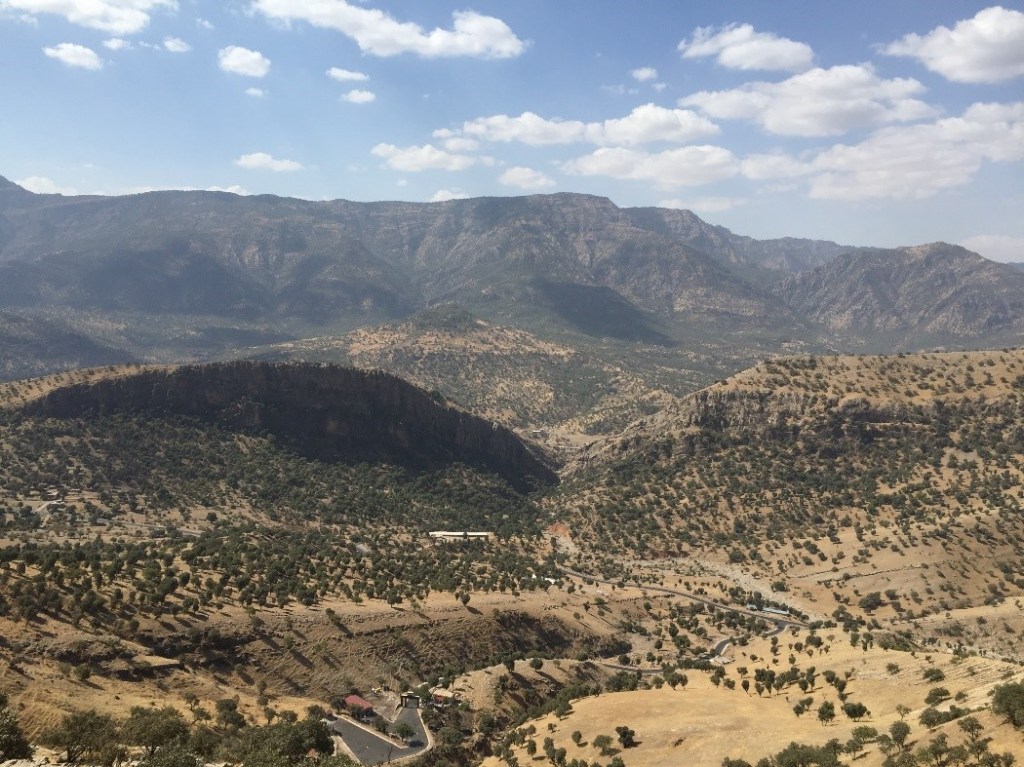
by Emily Tilby | (emct3@cam.ac.uk) When I found out that I would be taking part in this summer’s season of Excavations at Shanidar Cave I was really excited as the cave is so important in our understanding of Near Eastern Prehistory and Neanderthal behaviour. I was also slightly nervous as this would be my first experience taking…
-
Public History at the Cambridge Festival of Ideas

Cambridge PhD students Bethan Johnson and George Severs (@GeorgeSevers10) talk to Doing History in Public about their recent Festival of Ideas panel Forms of Extreme Protest in the Post-War West. Can you tell us a bit about your research? George: My PhD researches the history of HIV/AIDS activism in England from 1982, the year of…
-
How has protest in Europe evolved?: An Interview with Dr Hanno Balz.

by Emily Redican-Bradford (efr27@cam.ac.uk) & Dr Hanno Balz (hb528@cam.ac.uk) Emily Redican-Bradford interviews Dr Hanno Balz, who has recently joined the Faculty of History at Cambridge, having previously taught at the universities of Bremen, Lüneburg and John Hopkins. His research focuses on Modern German and European History. Dr Balz, as part of your research, you examine…
-
Mike Leigh’s Peterloo: Inequality and resistance in nineteenth-century British society

Aoife O’Leary McNeice (@aolmcn) and Helen Sunderland (@hl_sunderland) review Mike Leigh’s film Peterloo which came out earlier this month. Mike Leigh’s Peterloo recounts the weeks leading up to the infamous massacre of peaceful working-class protestors by the yeomanry at St Peter’s Field, Manchester on 16 August 1819. It is hard to identify a single protagonist, Leigh…
-
5. Victorian Hair Jewellery

By Maggie Kalenak Either encased under glass in brooches, lockets and hair accessories or woven with wire to create three-dimensional ornaments and chains, the use of hair in sentimental jewellery was a fixture of British fashion from the 17th century through the end of the 19th, reaching its height in popularity between 1810 and 1850.…

 doinghistoryinpublic.org