-
3. The Singapore Stone

By Alasdair Chi The Singapore Stone, as a stele or shards, remains the longest-enduring extant proof of Singapore’s antiquity. Erected by the mouth of the Singapore River by the 13th century, and possibly even earlier, its 52 lines may have recorded the dealings of some great empire or monarch, or perhaps a more prosaic statement of…
-
4. Fuvu la kichwa cha Mkwawa (The Skull of Mkwawa’s Head)
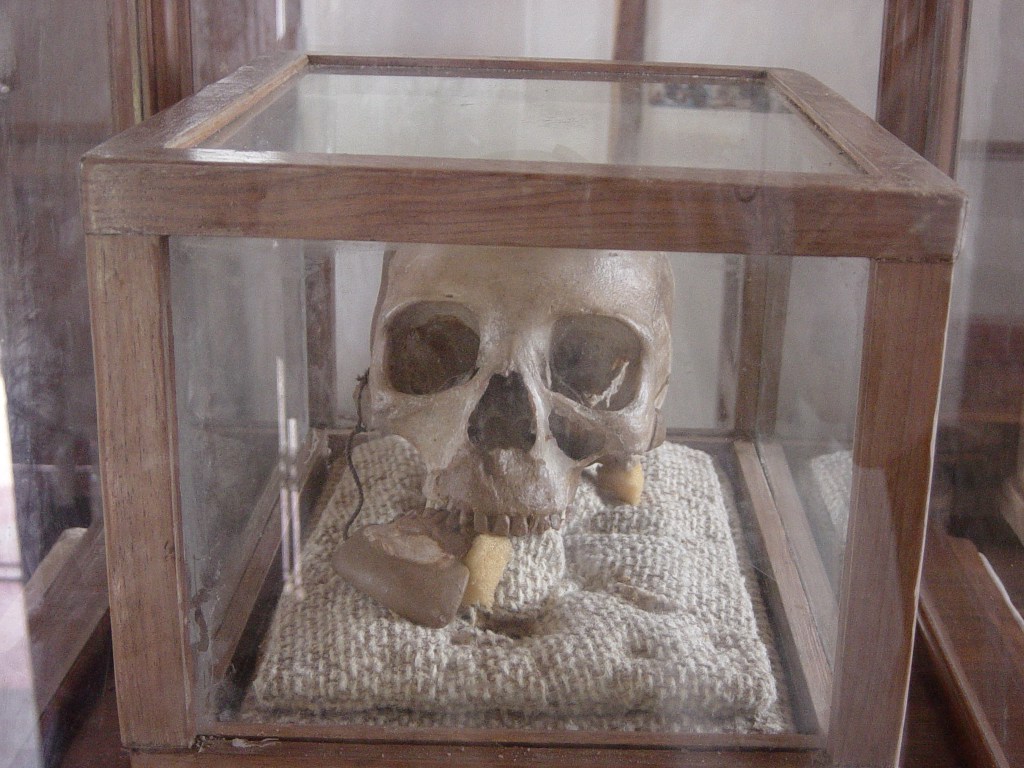
By Jeremiah J. Garsha (@jjgarsha) In 1898, Chief Mkwawa committed suicide after leading a seven-year revolt against German rule. His head was severed to claim a bounty, and then displayed as ‘a family trophy’ in the home of a British-born German colonial administrator. It was then defleshed and the skull was shipped to Germany, where…
-
5. Victorian Hair Jewellery

By Maggie Kalenak Either encased under glass in brooches, lockets and hair accessories or woven with wire to create three-dimensional ornaments and chains, the use of hair in sentimental jewellery was a fixture of British fashion from the 17th century through the end of the 19th, reaching its height in popularity between 1810 and 1850.…
-
6. Travelling to India: a handy list for the whole family

By Mobeen Hussain (@amhuss27) As a colonial officer in India, it was paramount that one knew what to expect and how to prepare for the sweltering climate. The mid to late nineteenth century saw a surge of advice books and manuals, mainly written by men, for families voyaging to the Subcontinent. One such book was…
-
7. Cylindrical Slag Block: Archaeological Discoveries in Lejja, South-eastern-Nigeria

By Chioma Vivian Ngonadi (@ChiomaNgonadi12) The process of precolonial metalworking is recognised by the presence of material fingerprints such as slags, remains of blooms, or finished objects (Chirikure 2013). In Lejja-Igboland, southeastern Nigeria, iron smelting is an indigenous craft specialization that flourished on an industrial scale from around 2000 BC (Eze-Uzomaka 2013). Evidence, in the…

 doinghistoryinpublic.org