-
20. An Icelandic Executioner’s Axe

By Stephanie Brown (@StephEmmaBrown) This axe can now be found at the National Museum of Iceland in Reykjavik. It was used on 12 January 1830, to execute Agnes Magnúsdóttir, a maid, and Friðrik Sigurðsson, a farmhand, for their role in the murders of ‘womanizer’, Natan Ketilsson, and Pétur Jónsson, an unfortunate bystanding victim. The crime took…
-
Cultivating research skills: artificial flowers and the process of making

-
2. Pearls in the Armada Portraits
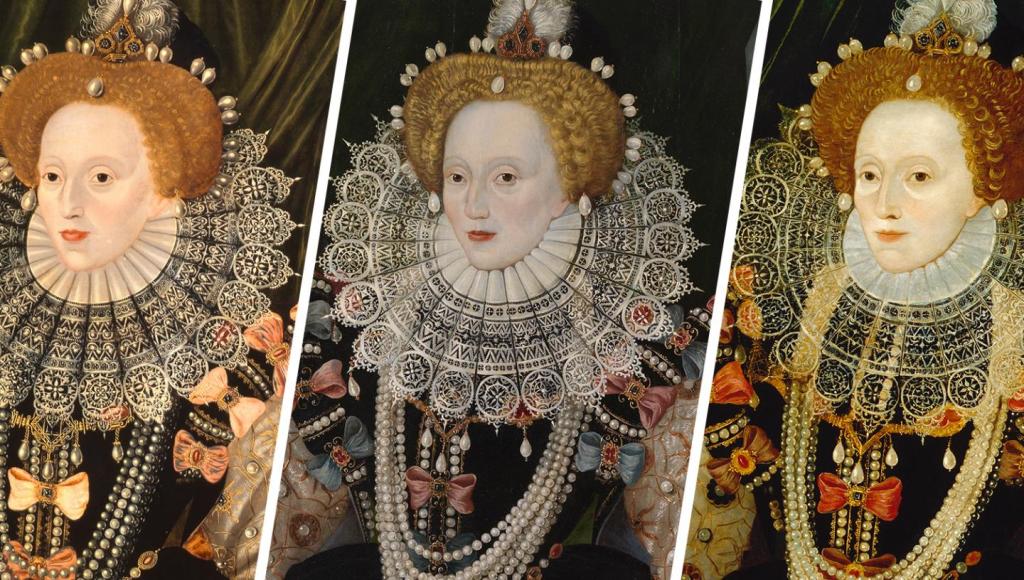
By Ellie Doran (@Elena_Doran) Only three Armada Portraits of Queen Elizabeth I survive.[1] All were painted to commemorate the English defeat of the Spanish Armada in 1588. Whilst it is fun to play ‘spot the difference’ between the details in each portrait, these paintings also provide beautiful sources for examining the global in the early modern period.
-
5. Children’s drawings in a calico book

By Zara Kesterton (@ZaraKesterton) The V&A holds a large collection of textile designs by William Kilburn, one of the most innovative designers of eighteenth-century Britain.[1] Born in Dublin in 1745, Kilburn completed his apprenticeship at a cotton printing factory before moving to London to establish himself in the trade. He specialised in botanical motifs, depicting familiar and exotic…
-
6. The 1667 Peace of Breda Medal

By Marlo Avidon (@MarloAvidon) Housed among the Fitzwilliam Museum’s many treasures is this 1667 medal by Jan Rottiers, commissioned to celebrate the Peace of Breda and the end of the Second Anglo-Dutch War. The front of the medal features Britannia, the personification of Britain, holding a spear and gazing at the departing ships of the British…

 doinghistoryinpublic.org