


by Sam Phoenix Clarke, @samjphoenix
‘Recent advances in physics hold out the prospect that human civilisation may be destroyed. Recent advances in history, revealing to us with a startlingly clearer insight what the nature of civilisation is, might, if they were more widely understood, give us the little bit of extra wisdom which would induce us to continue with the experiment rather than destroy it.’[1]
This sentiment, delivered in a 1950 public lecture by the Irish classicist and historian of science Benjamin Farrington (1891-1974), stands as an emblem of both the hopes and fears attached to mid-century science, and the belief, held by many socialists, that a sense of history was urgently necessary to ensure that these newfound scientific powers would be used for good. Farrington’s career as a public historian and activist on the scientific left sought to bring to politics a sense of the vast prospects for human wellbeing loosed by the advances of twentieth-century science, and to bring to science a sense of the fragility and historical contingency of its own success.
Born and educated in Cork and Dublin, Farrington developed a successful academic career as a classicist at the University of Cape Town in South Africa, becoming politically active as an anti-segregationist, socialist, and Irish Republican, and gaining some renown as a lecturer and educator among activist circles. After moving to Britain in 1935, and taking up a chair in Classics at University College Swansea in 1936, he became prominent in the scientific left over the next two decades, during which he wrote for popular, scholarly, and political audiences on the social and political history of science in the classical world. Alongside scientists such as Lancelot Hogben, J.D. Bernal, and J.B.S. Haldane, he became prominent in the Social Relations of Science movement – a broad coalition of liberal, socialist, and communist groups who argued for state planning and intervention in science policy in order to better apply science and technology directly to social welfare.
In his histories, Farrington approached the problem of decline in the history of science – seeking to explain the scientific stagnation of post-Roman Europe, and to find lessons in this for the politics of modern science. Classical science, he argued, was limited by its aloof, speculative self-image, as something detached from the needs and wellbeing of the masses – and the contemporary ideology of ‘pure science’ similarly stifled science’s altruistic prospects. The economic incentives for classical science to apply technology to ameliorating human suffering were absent, as manual labour was the preserve of an enslaved class for whom the state cared little – and, for Farrington and his allies, capitalism was similarly disincentivised to use technology for social wellbeing when it was not immediately profitable. The classical state, finally, was hostile to the scientific education of the popular classes, with its interests better served by a state-driven programme of religious superstition – analogous to, he argued, the modern hostility to scientific education on the part of entrenched class interests and traditional morality. Only a mutual alliance of science and socialism, Farrington argued, could fully realise science’s potential in the amelioration of suffering, and ensure that its fruits were available to all who would benefit from them.
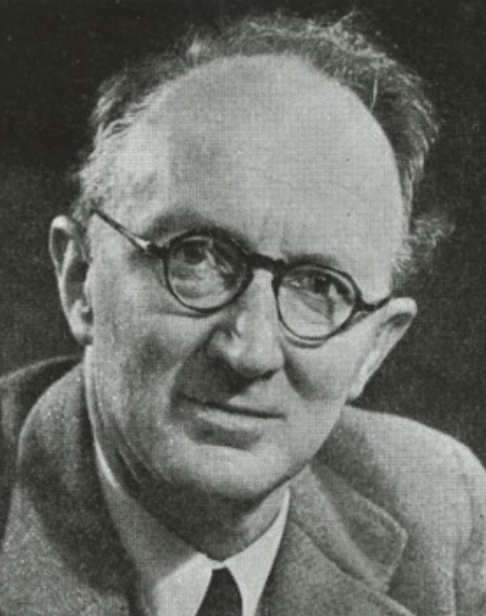
“Benjamin Farrington: Scholarship, Science, and Communism”
(Brave New Classics, 2023, CC BY 4.0 license)
While academic classicists were sometimes dismissive of his work – viewing it as overly demagogic in its uses of history – Farrington became a popular figure among scientists, and as a humanistically-trained voice within the broader scientific left. As a lecturer and popular communicator in classics and the history of science, his public career spanned a range of adult educational institutions, the Left Book Club and – until leaving the party over the invasion of Hungary in 1956 – the educational circles of the Communist Party of Great Britain. While sharing the convictions of his allies on the scientific left that socialism offered the best promise for the rational and benevolent use of science and technology, he would, in an interview shortly before his death, criticise the ‘complete optimism about Marxism and science’ on the part of his earlier comrades, for whom it seemed as if ‘science and Marxism had absolutely been married to one another – they were the same kind of thing’[2].
In the context of a mid-century Marxist tradition that tended to be deterministic about history and optimistic about science, Farrington’s histories stand as a poignant and cautious counter-current to the bravado of his allies. He stressed that if science was to work for the people, then it could not be an elite, technocratic project, but must entail the mass expansion of scientific education and the cultivation of a critical, historical self-consciousness on the part of scientists. The promises of socialism should not just be material enrichment, but ‘more schools, more theatres, more libraries, more research institutes, more educated and independent-minded men and women’.[3]
This sentiment was not just an ethical claim, but a historical vision that saw the survival, utilisation, and progress of science as a fragile, contingent thing: one that as much depended on a critical, educated, and politically active public as it did the leaps and bounds of scientific genius. Science, Farrington wrote, ‘failed in antiquity because it was the narrowly-conceived occupation of a privileged class which did not take root in the general education nor yield the benefits it is capable of to men at large. Should it fail again it will be for the same reason’.[4]
Further Reading
By Benjamin Farrington
Science in Antiquity (Oxford University Press, 1936)
Vesalius on the Ruin of Ancient Medicine: A Neglected Point of View (Modern Quarterly, 1938)
The Gods of Epicurus and the Roman State (Modern Quarterly, 1938)
Science and Politics in the Ancient World (George Allen and Unwin, 1939)
Head and Hand in Ancient Greece: Four Studies in the Social Relations of Thought (Watts & Co, 1947)
Has History a Meaning? (South Place Ethical Society, 1950)
Other Works
Sam Phoenix Clarke – “What Light from the Ancient World?” Histories of Science and the Marxism of Benjamin Farrington (forthcoming, preprint available on request at sam.jp.clarke@googlemail.com)
Christopher Stray – Benjamin Farrington: Scholarship, Science, and Communism (Brave New Classics, 2023)
John Atkinson – Benjamin Farrington: Cape Town and the Shaping of a Public Intellectual. (South African Historical Journal, 2010)
Gary Werskey – The Visible College: The Collective Biography of British Scientific Socialists of the 1930s (Holt, Rinehart, and Winston, 1978)
[1] Benjamin Farrington, Has History a Meaning? (London, South Place Ethical Society, 1950), p.2
[2] Benjamin Farrington to Gary Werskey, interview on 17th April 1972 – in P.G. Werskey, The Visible College (NYC: Holt, Rinehart and Winston, 1978), p. 250
[3]Benjamin Farrington, What Light From the Ancient World?, in Grace Wyndham-Goldie, ed., The Challenge of Our Time (London, Percival Marshall, 1948), p.37
[4] Benjamin Farrington, Science in Antiquity (OUP: London, 1936), pp.245-256
 doinghistoryinpublic.org